
4. Our first proper night in our campervan: everything we got wrong
Rain, wind, one other campervan on a bleak October site, a water tank that refused to fill for reasons that took an embarrassingly long time to work out, and a heating system that turned out to be completely magnificent.

We're Kate and Charlie — mid-fifties, one anxious dog called Huffle, one fifteen-year-old Peugeot Boxer campervan called Brigitte, and absolutely learning as we go. Whether you have a campervan or a motorhome, if you're new to this or thinking about it, come with us.
IN A HURRY? THE SHORT VERSION | Things to know before your first proper nights in a campervan or motorhome:
(1) Close the fresh water outlet before you fill the tank. Write it on your hand if you have to.
(2) The heating will probably surprise you — in the best way.
(3) Turn the hot water on fifteen minutes before you want a shower.
(4) Our hot water tank holds 11 litres of hot water. Go easy!
(5) A digital thermometer velcroed to the wall is one of the best things in the van.
(6) Levelling chocks and a dashboard spirit level are worthy items.
(7) Pre-make dinner at home, for your first van evening — one less thing to figure out.
(8) If the van rocks in the wind at night, it is fine. You will get used to it faster than you think.
A bleak arrival — and why we nearly turned round
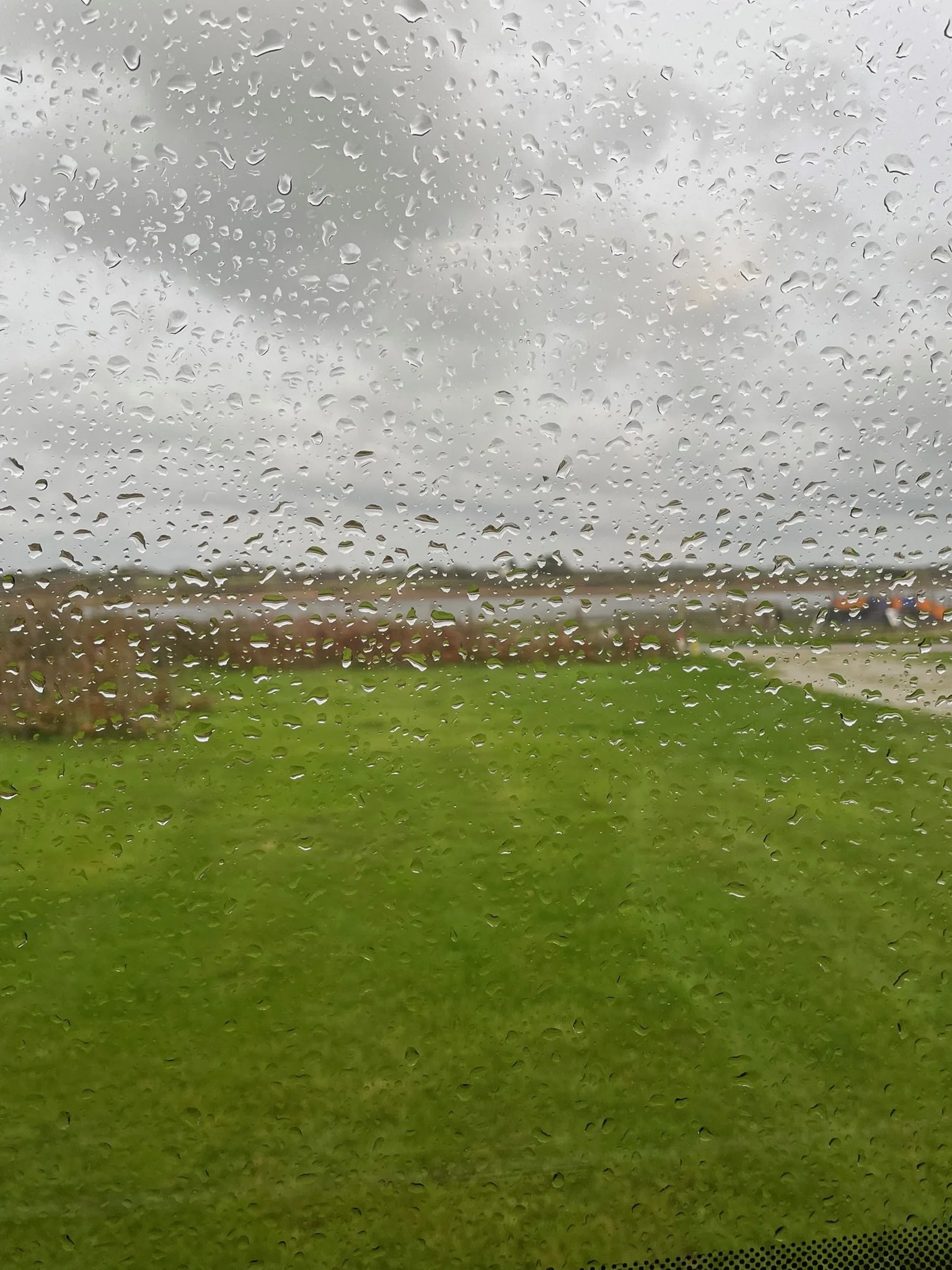
Our first proper night in our van- not the dealer campsite handover night, but the first time we drove her ourselves to somewhere we had chosen - was at a campsite about half an hour from home. It was the end of October and we arrived under dark grey clouds.
Then came the rain. It was properly bleak. Low sky, horizontal rain, the kind of damp that gets into everything immediately. There was one other campervan on the whole site, parked at the far end, and the place had the particular deserted quality of a campsite in the wrong season. We sat in the cab for a moment and looked at each other.
We had driven half an hour in the rain to spend one night in a field. In October. We had paid good money for the van and good money for the pitch. We had friends joining us for dinner. And our immediate, honest, unspoken reaction was: Should we have stayed at home in the warm?
The answer, as it turned out, was all around us once we got the kettle on and stopped looking at the weather and started looking at the van. But we are getting ahead of ourselves. First, the water tank incident.
The fresh water tank situation - a cautionary tale
We had arrived at the campsite and Charlie set about filling the fresh water tank. He connected the hose to the water point, turned it on, and waited for the tank gauge to start rising.
It did not rise.
He waited longer. Still nothing. He checked the connection. He checked the gauge. He tried a different water point. He wondered, briefly, whether the tank or the gauge was broken. He spent ages working through possible explanations before the actual explanation occurred to him.
The fresh water outlet - the tap that releases water from the tank - was open. Every drop going into the tank was draining straight back out of the bottom.
Close the fresh water outlet before you fill the tank. This is the kind of thing that sounds completely obvious in retrospect and is apparently not obvious at all in the moment, on a wet October evening, in a field half an hour from home when you are new to campervans.
We are telling you this because we are reasonably intelligent people who had done a considerable amount of research and it still caught us out.
What we learned: Before you fill your fresh water tank, check that the outlet tap is closed. Before you do anything with water in a campervan or motorhome, check the relevant taps are in the position you think they are. Water has a talent for going where you least want it.
The heating - which turned out to be completely brilliant
We had wondered, before the trip, whether the heating would really work in cold, wet, properly miserable October weather. We had read about heating systems. We had watched videos. We were cautiously optimistic.
We should not have been cautious. The van heated up so quickly and so effectively that within fifteen minutes of turning it on we were sitting in a warm, dry, cosy space while the rain did its worst outside. It was genuinely impressive. We actually had to turn the heating right down.
One of the best purchases we have made for Brigitte is a small digital thermometer, velcroed to the wall in the living area. It tells us the actual temperature inside the van at any given moment - which matters more than you might expect. When I announce, from under a blanket, that it must be at least minus twenty in here, Charlie can point at the thermometer, which says eighteen degrees, and give me a look. He does this. Regularly. The thermometer has become a feature of our relationship with the van.
Kettle & Keys tip: Velcro a digital thermometer at eye level in the living area. It removes all guesswork about temperature and prevents the kind of heating-related disagreements that would otherwise be impossible to resolve. Buy one before your first trip. [LINK]
What we learned: Test your heating early in your van ownership journey and in proper cold weather. Not just a mild autumn evening - actual cold. You want to know what it can do before you need it in France in January. Ours exceeded all expectations.
Levelling up - the chocks and the spirit level
This was also our first proper opportunity to use the levelling chocks and the spirit level we had velcroed onto the dashboard. An unlevel pitch is not comfortable to sleep on - you spend the night slowly rolling towards one wall - and the spirit level lets you see at a glance how far off you are, so you can drive forwards or backwards onto the chocks to correct it.
It takes a little practice to get right - a second person guiding from outside helps enormously - but by the end of that first evening we had the system down. Level pitch, warm van, rain doing its worst outside: we were beginning to understand what this was actually about.
Kettle & Keys tip: Keep your chocks accessible — not buried in a locker under other things. You want them in hand the moment you arrive on a pitch. And a bullseye spirit level on the dashboard is a two-pound solution that makes every arrival considerably less stressful. [LINK]
Night one - friends, chilli and 47mph winds
We invited friends who also have a van to come for dinner - the kind of friends who understood immediately exactly why we had done this and arrived bearing a vanwarming present: retractable rechargeable string lights, compact and beautiful, which have been in the van on every trip since.
We reheated a veggie chilli made at home. The right call. When you are still learning the van, spending the evening actually enjoying yourself rather than navigating a new kitchen is considerably more sensible than attempting anything ambitious. The heating worked. The lights worked. The wine was good. It felt, briefly, like we knew what we were doing.
As our friends said goodbye, the wind arrived. Forty-seven miles per hour, sustained. The van rocked. Not alarmingly - it was not going anywhere - but enough that sleep required a certain acceptance of the situation. A campervan or motorhome in significant wind makes a considerable amount of noise and you get used to it faster than you expect. The key discovery is that the van is absolutely fine. It is only you who needs convincing.
What we learned: Pre-making dinner at home for early van trips is a genuinely good idea. One less thing to figure out. Keep it simple until the van kitchen is familiar territory. And if the wind arrives in the night - the van is more solid than it sounds. You will sleep eventually.
The ‘sleep hat’ revelation - a link for later
This was also the night we first realised we needed ‘sleep hats’. Not because it was desperately cold - the heating had done its job - but because when the heating drops overnight and you are warm in your duvet but your head is out, the difference is noticeable. A soft cotton beanie costs almost nothing and makes a real difference.
We have written a full post about sleeping warm in a campervan in winter - bedding, sleep hats, the whole system. [LINK — see: The warm bed chronicles] If staying comfortable overnight is something you are thinking about, that post has everything you need.
The shower - brave, the cold and a lesson in perspective
I had a shower in the morning. This requires more planning than a shower at home.
The hot water heater needs to be turned on about fifteen minutes before you want to use it. This is the kind of thing that sounds simple and is surprisingly easy to forget at 7am when all you want is to be warm and clean. Turn it on, make a cup of tea and get back into bed is what we suggest, come back to hot water.
Our tank holds eleven litres of hot water. When it is gone, it is gone - until the tank refills and reheats, which takes time. Eleven litres is enough for two showers if you are efficient about it. You start to think about water differently. You become, without quite meaning to, more considered about how you use it.
I was standing in a tiny shower room in a campervan in a field in the rain, having a hot shower, thinking about how much water I waste at home without noticing. It is not lost on me how ridiculous that sounds - how lucky I am to have any of this at all. But that is part of what the van does. It shrinks things down to the right size.
The shower itself was powerful and genuinely good. Cold arrival, warm van, proper shower, perspective restored. We drove home in weak autumn sunshine feeling considerably more competent than we had felt the day before.
What we learned: Turn your hot water heater on fifteen minutes before you want to shower. Set a reminder on your phone until it becomes automatic. And use water carefully - you will be surprised how quickly you adapt and how much you appreciate it.
Things we used on this trip
Everything mentioned in this post, linked below.
Essential van kit
Retractable rechargeable string lights Compact, beautiful, and in the van on every trip since. The best vanwarming gift. [LINK]
Digital thermometer (velcro-mounted) On the wall in the living area. Tells you what the temperature actually is. Removes all guesswork and most arguments. [LINK]
Levelling chocks (interlocking set) Drive onto, stack for height, store nested. Level pitch, level sleep. [LINK]
Bullseye spirit level (velcro-mounted) Dashboard, visible from outside. Two pounds of peace of mind on every arrival. [LINK]
Sleep hats — soft cotton beanie For the head that sticks out of the duvet. More on this in The warm bed chronicles. [LINK]

Kate, Charlie, Huffle & Brigitte
Kettle & Keys
comfort, wherever you park up.
Some links in this post are affiliate links, marked with [affiliate]. This means if you buy through them, we earn a small commission — at absolutely no extra cost to you. We only ever link to things we have genuinely used and would recommend to a friend regardless. It's one of the ways we keep Kettle & Keys running, and we're grateful for every click. Thank you for supporting us.