
Kitchen kit essentials

We’re Kate and Charlie – mid-fifties, one anxious dog called Huffle, one fifteen-year-old Peugeot Boxer campervan called Brigitte, and absolutely learning as we go. Whether you have a campervan or a motorhome, if you’re new to this or thinking about it, come with us.
Van kitchen essentials: the kit that earns its place
We ran a café in Cornwall for seven years. We know what it is to cook in a small space with limited kit and make it work. The van kitchen is the same philosophy taken to its logical extreme – and we love it.
IN A HURRY? THE SHORT VERSION | The things we’d be lost without: airtight clip-lock containers (the Époisses incident taught us this the hard way). The AeroPress. Dock & Bay microfibre tea towels – dry in twenty minutes. A stove top milk frother. IKEA ceramic mugs. Duralex tumblers. A crêpe pan. Good collapsibles for everything that would otherwise take up fixed space. A proper chopping board. Knives in a roll – including a bread knife, a cheese knife and a small serrated knife for tomatoes.
Before we got a campervan, I spent three years running a mobile coffee van on the north Cornwall coast, and then seven years running our own café in Truro. Charlie was there for all of it. Between us we have spent a very long time thinking about what a small kitchen needs in order to function properly, and what it absolutely does not need. The van kitchen is, in a way, the purest version of that question – because the space is small enough that every wrong answer shows immediately.
What follows is everything we actually use in Brigitte’s kitchen, after nearly a year of owning a van and cooking in one. It is not a definitive list and it is not the only way to do it. It is just what works for us, explained honestly, in case it is useful for you.
Links in this post are affiliate links. This means if you buy through them, we earn a small commission – at absolutely no extra cost to you. We only ever link to things we have genuinely used and would recommend to a friend regardless. It’s one of the ways we keep Kettle & Keys running, and we’re grateful for every click. Thank you for supporting us.
Storage tubs and clip-lock containers – the Époisses lesson
We should talk about the Époisses. For those who haven’t encountered it, Époisses is a washed-rind French cheese of extraordinary flavour and equally extraordinary smell – the kind of smell that, in a small enclosed space, becomes something close to an emergency. We bought one from a market in Burgundy, wrapped it in paper, and put it in the van fridge. We discovered at approximately 11pm, somewhere in Provence, that the paper was not equal to the task. The van was practically vibrating with the strength of the smell of Époisses. We tried to ignore it. We could not ignore it. At midnight we took it outside and threw it away in a campsite bin, and we still think about the sadness of wasting good cheese.
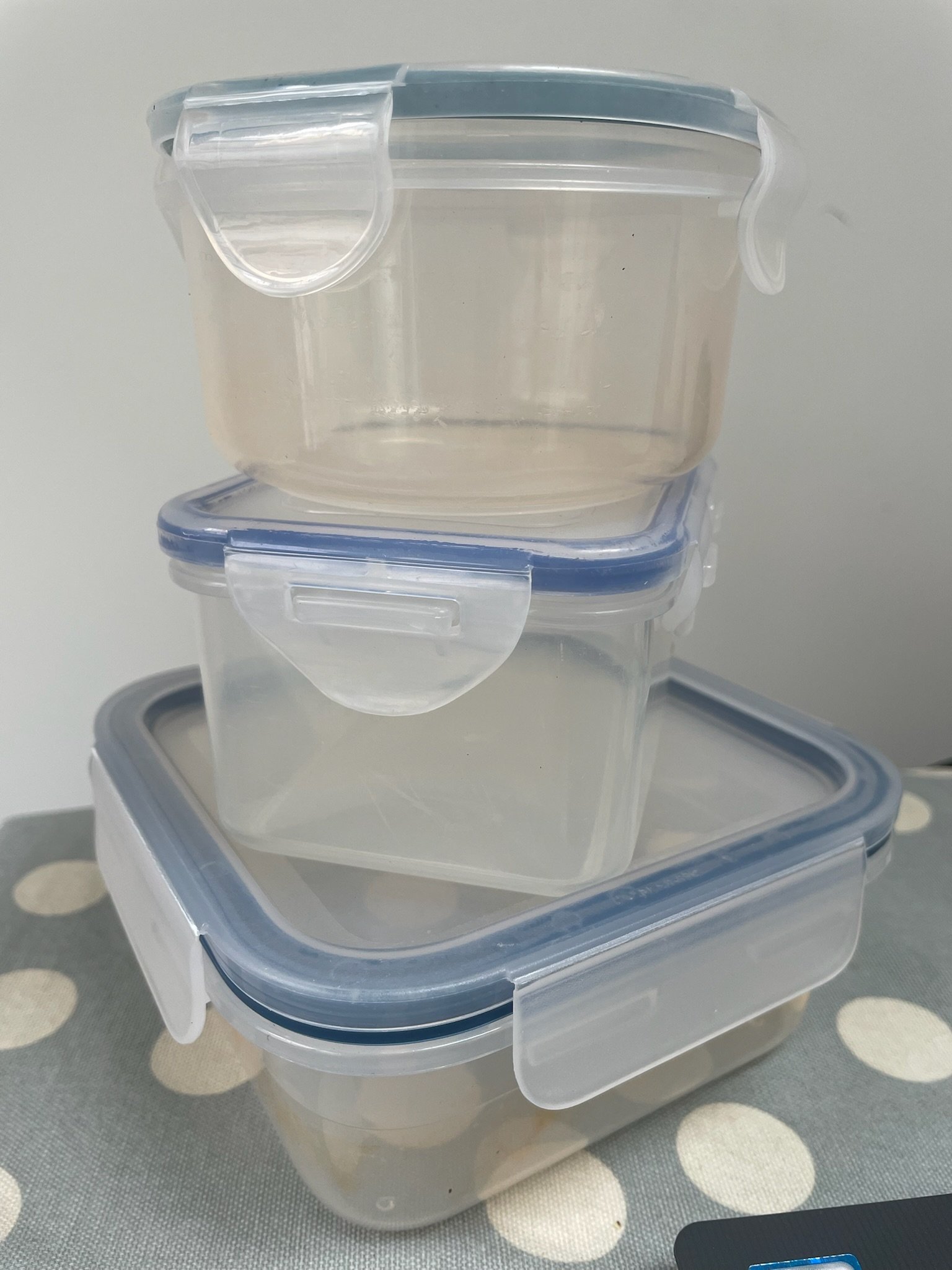
We now use clip-lock containers for everything that has any ambition of scent – cheese, particularly, but also anything that needs to stay fresh between meals, any leftover from the previous evening, anything that would otherwise roll around or leak or redistribute itself across a shelf on a corner. The clip-lock tubs are really great – the kind with proper fastenings on all four sides rather than the kind that merely suggests it might stay closed. We have a range of sizes and they live in the kitchen cupboard and the fridge, and the van has not smelled of cheese since.
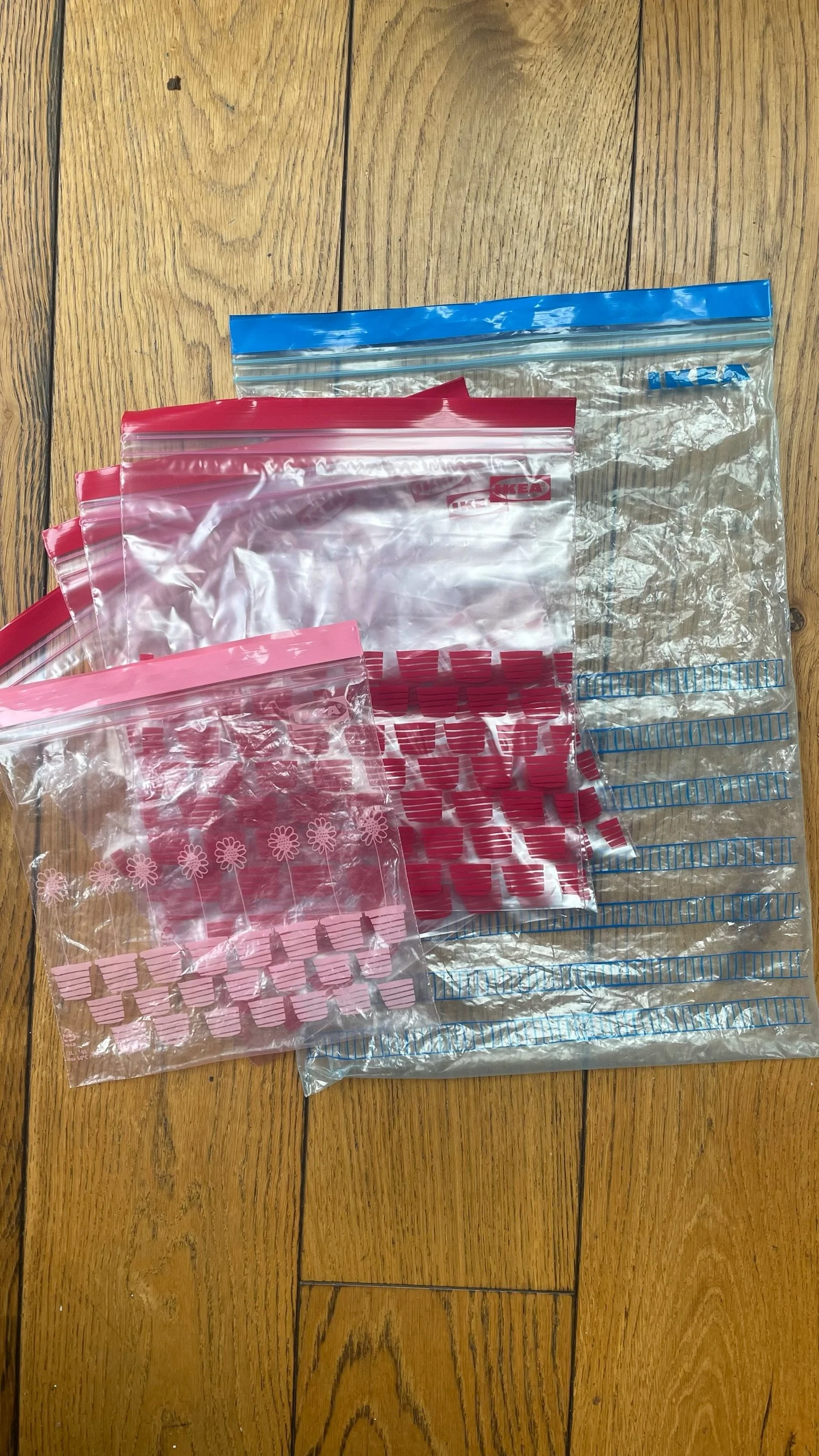
Alongside the clip-lock containers, good quality zip lock/press close bags (we use IKEA) for the dry goods – pasta, rice, coffee, spices, the things that would otherwise come in packets that don’t reseal reliably and take up more space than they deserve.
Kettle & Keys tip: We use zip-lock bags for teabags and coffee portions – small, flat, resealable, and they keep things fresh considerably better than the original packaging. A few different sizes live in the kitchen drawer and we use them constantly.
Silicone oven gloves
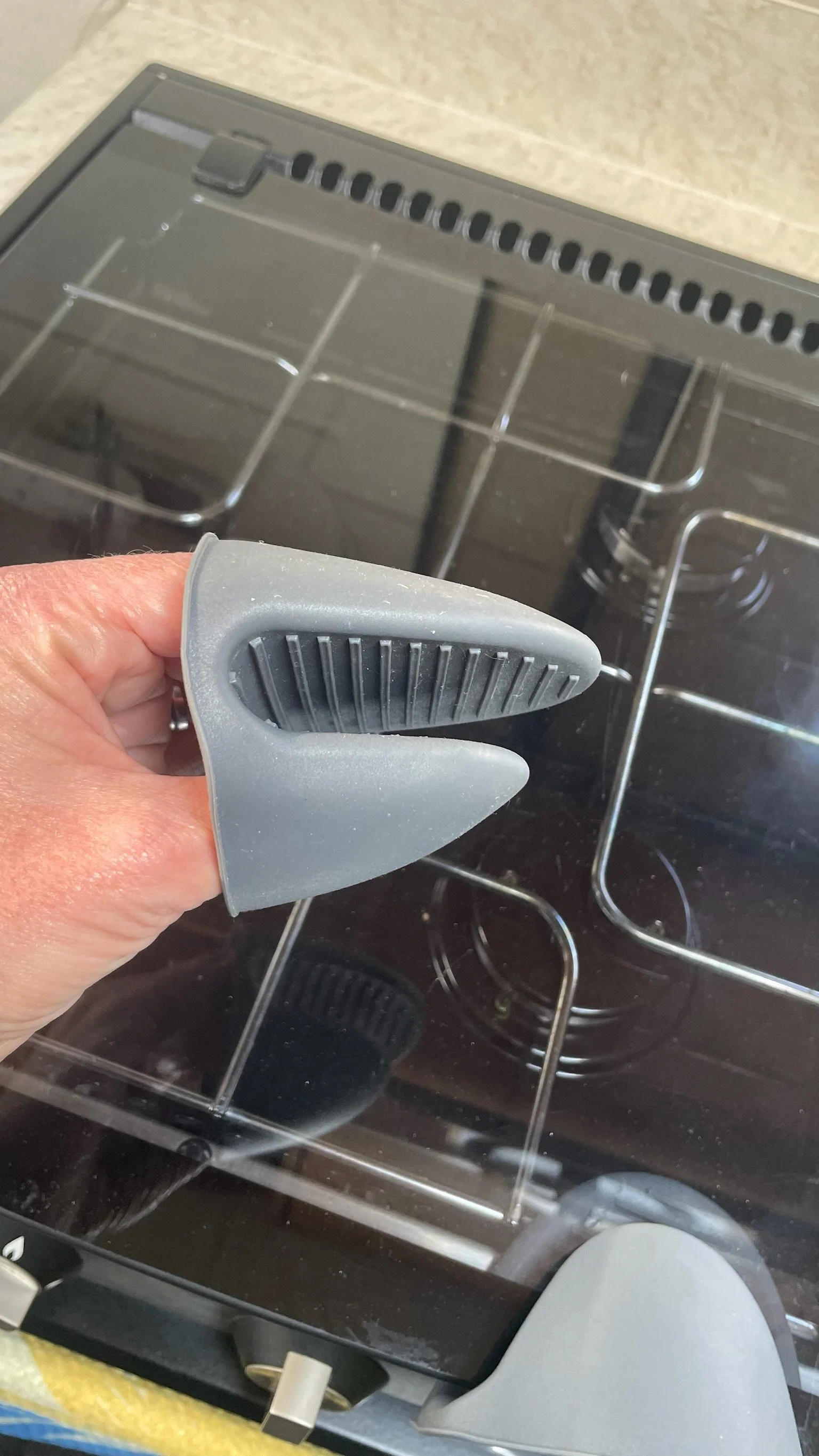
These are brilliant and have a dual function. They are small enough to not get in the way and give you proper control over what you are getting out of the oven.
They also work brilliantly to stop the glass cooker lid from rattling when in transit. I tuck one under each corner of the glass cooker lid. I wouldn’t be without these!
The AeroPress – covered in the coffee post, worth repeating here
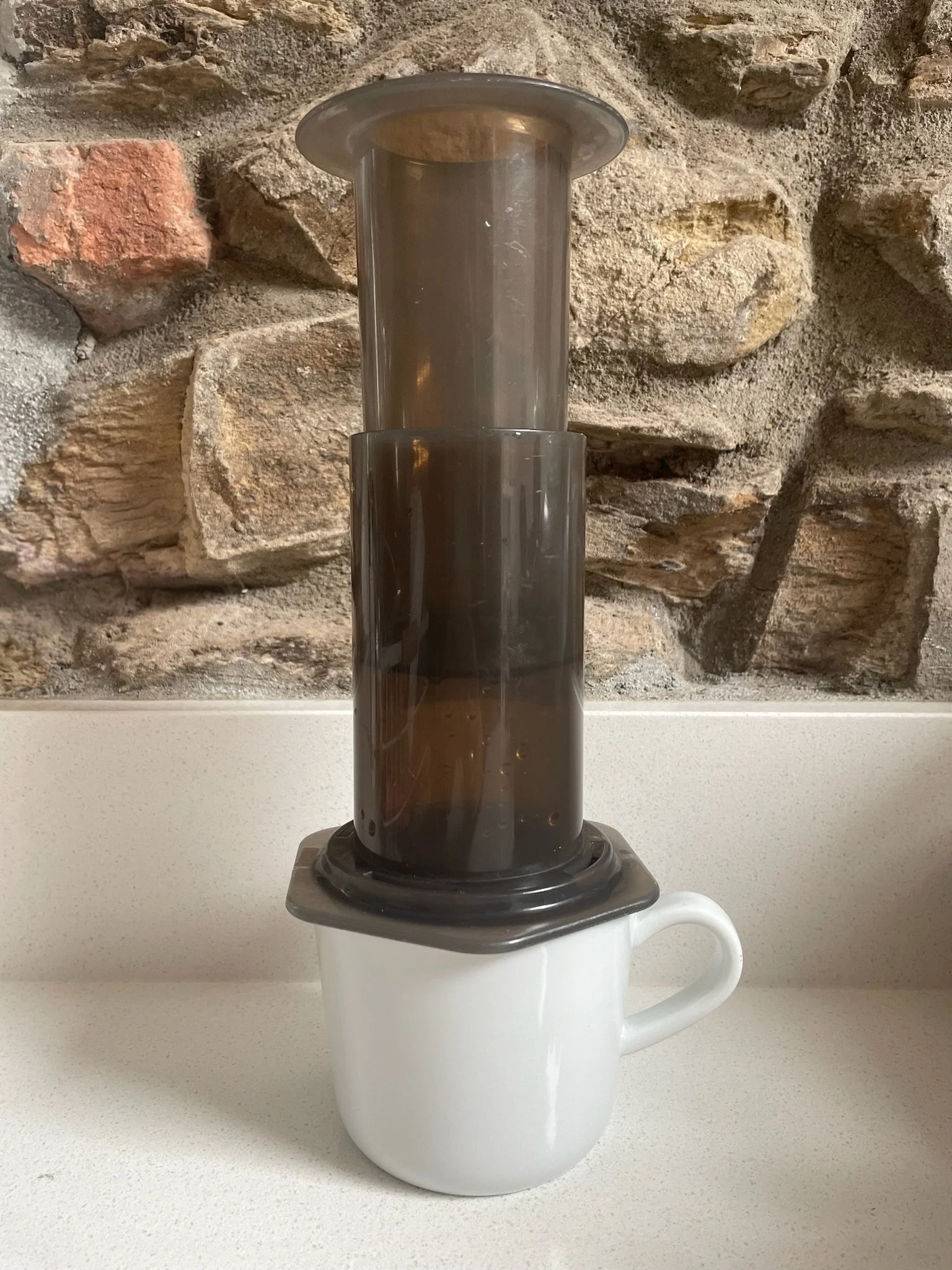
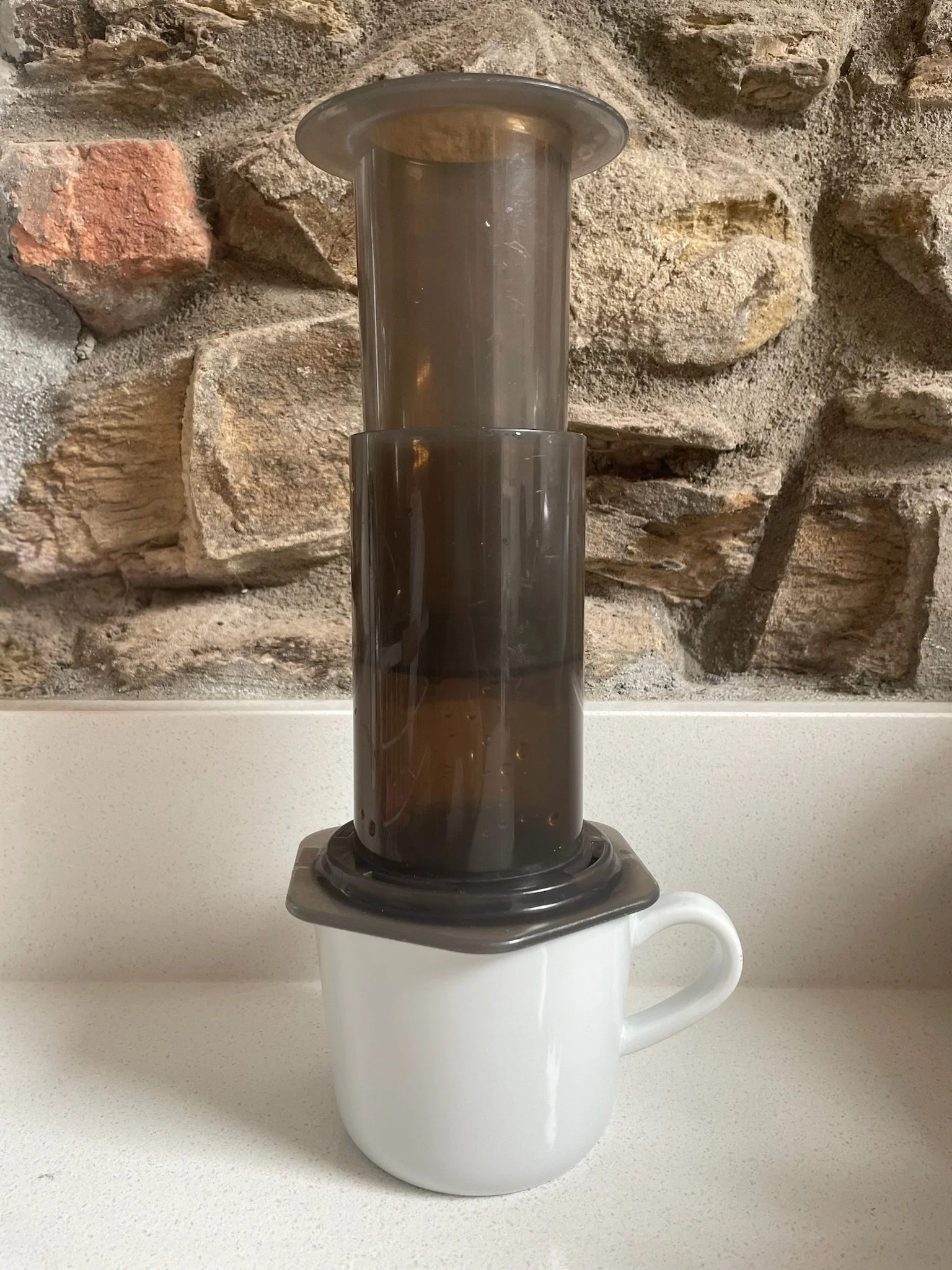
We have written about coffee at some length elsewhere on the blog, so we won’t repeat all of it here. But the AeroPress belongs in the kitchen essentials list because it is as much a kitchen tool as a coffee one – compact, straightforward to clean, takes up roughly the space of a large mug, and makes a genuinely brilliant cup. It lives in a small canvas pouch along with spare filters and the coffee scoop, and the pouch lives in the van permanently. We take it out to use it and put it straight back. It is always findable and always complete, which in a van kitchen is more than can be said for most things when you first start out.
The stove top milk frother – small, cheap and completely worth it
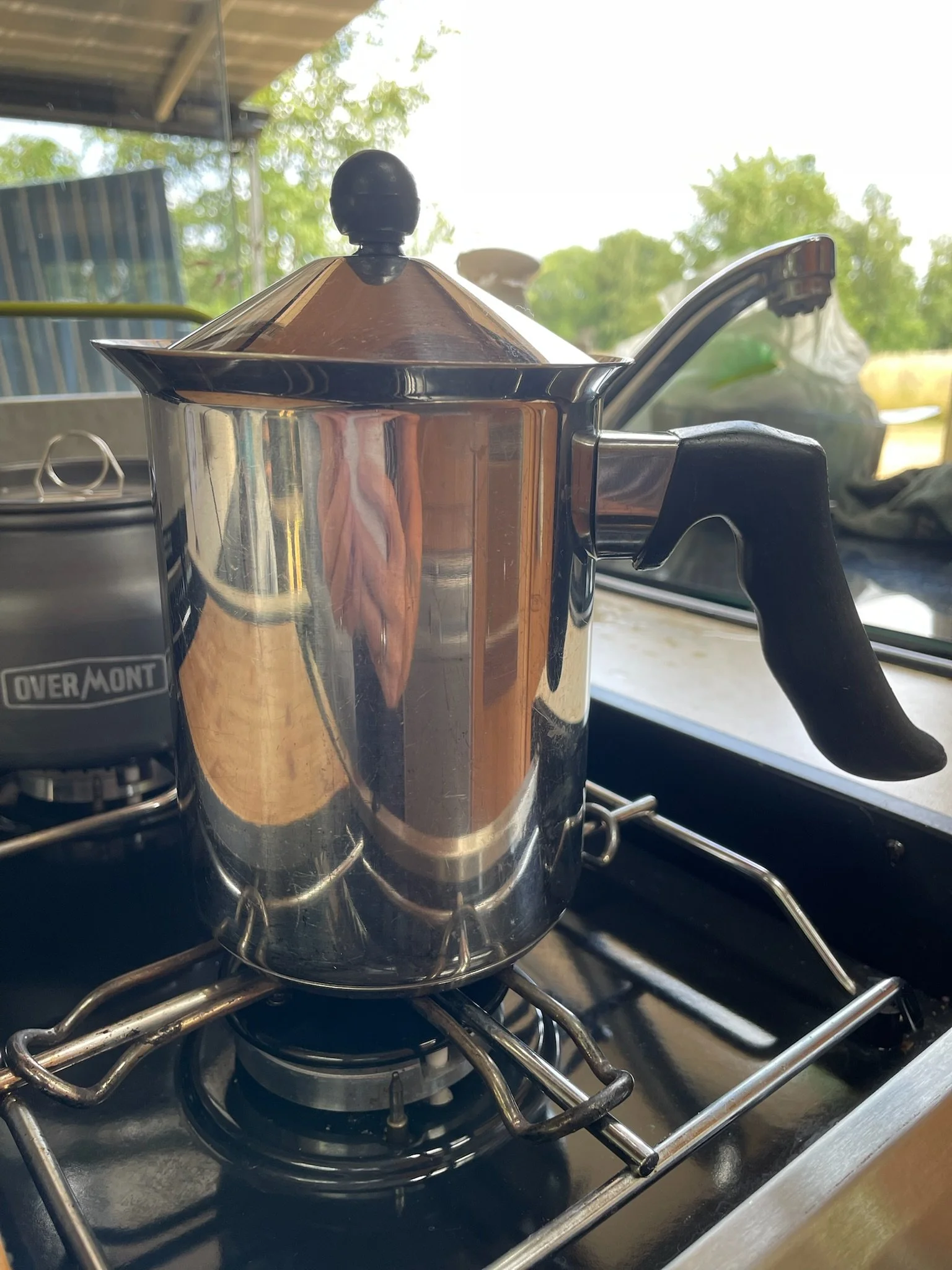
A small stainless steel stove top milk frother – the kind you put directly on the gas hob – heats milk to exactly the right temperature in about a minute and a half and froths it beautifully for a flat white or a cappuccino. We think that the difference between properly heated, frothed milk in your morning AeroPress coffee and milk poured cold from the bottle is the difference between a good morning and a slightly flat one.
Kettle & Keys tip: Get a frother with a comfortable handle that stays cool on the hob. The cheap ones have metal handles that conduct heat and require a tea towel, which is an unnecessary complication at 7am.
Dock & Bay microfibre tea towels – genuinely better than cotton
A tea towel sounds like the least remarkable item on this list and in a house it probably is.. Standard cotton tea towels are fine at home where there is a radiator to dry them on and a drawer to store them in. In a van they stay damp considerably longer than you’d like, take up more space than they deserve, and develop that particular damp-cotton smell that a small enclosed space does not benefit from.
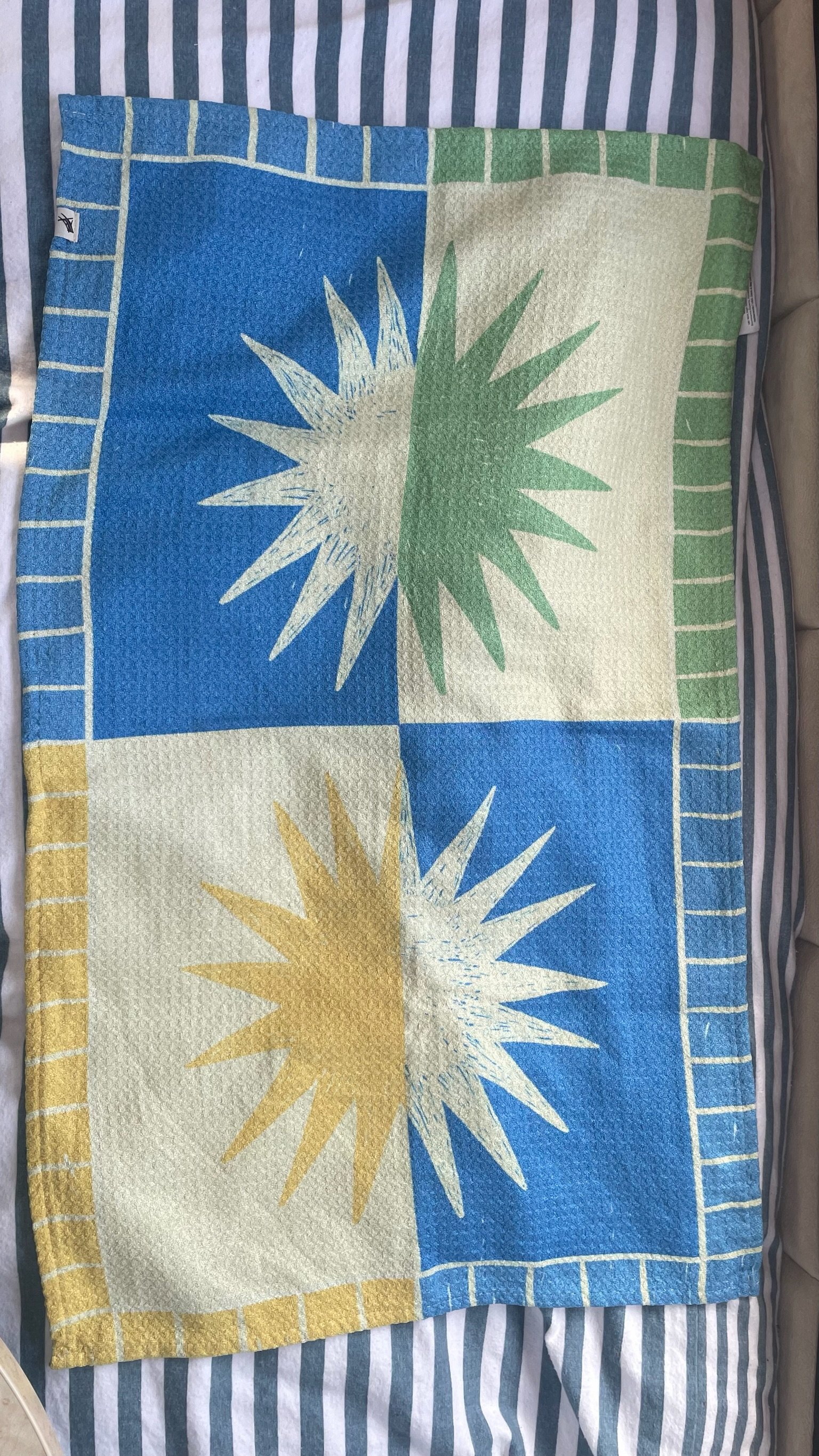
Dock & Bay make microfibre tea towels that dry fast hung over the hob handle, absorb more than a cotton equivalent, fold to almost nothing and come in genuinely nice colours. They are a B Corp certified UK brand making everything from 100% recycled materials, which sits well with how we try to think about the van generally. We use two – one in use, one drying – and have never needed more than that.
Microfibre cloths – for surfaces and the morning condensation
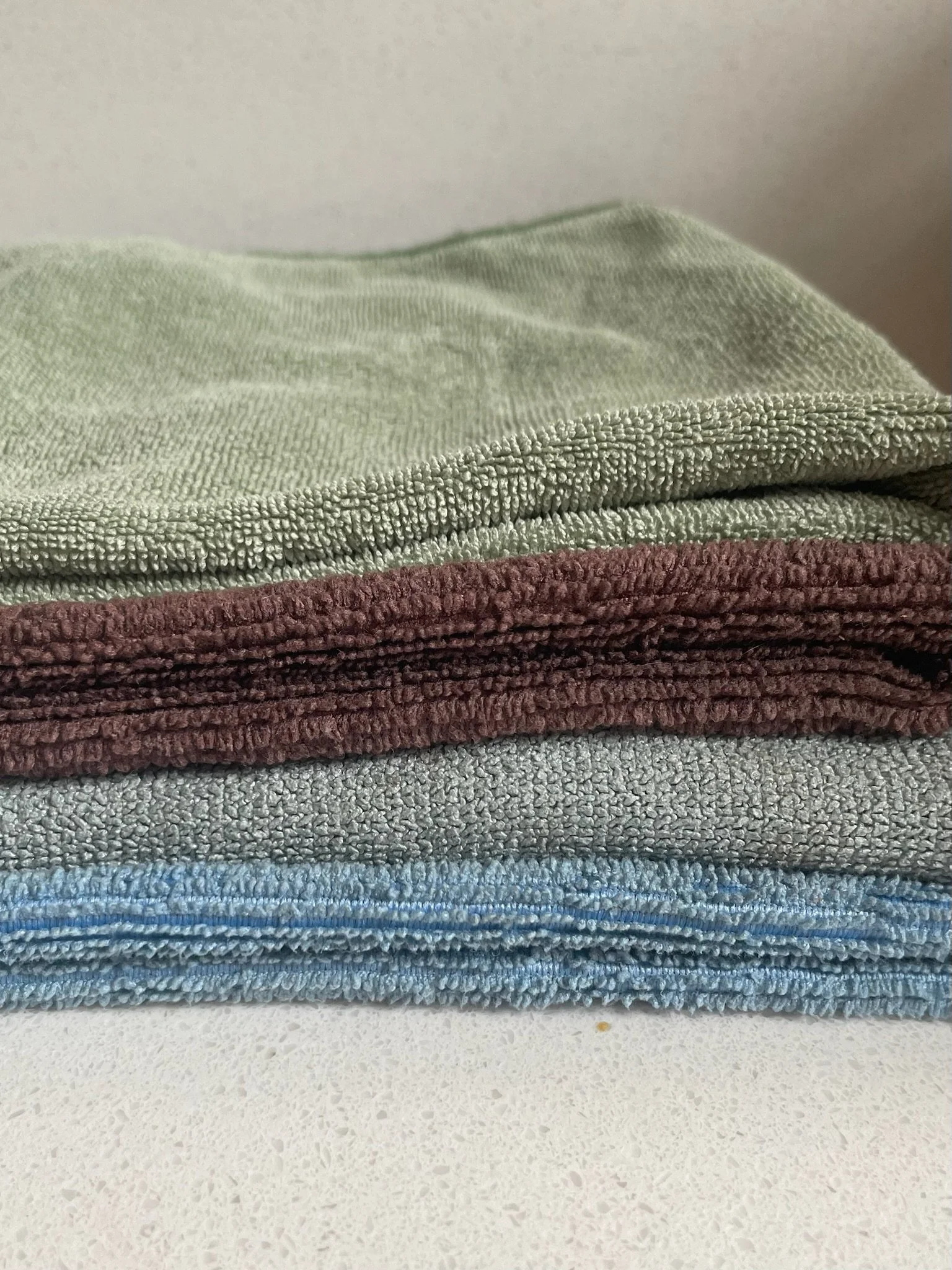
A large stock of microfibre cloths lives under the kitchen sink in a stuff bag – for wiping down surfaces, cleaning the hob after cooking, mopping up the inevitable spill, and the morning condensation wipe-down that keeps the van dry and fresh throughout a cold trip. They wash at 30 degrees, dry quickly, and last for years. We buy them in multipacks and rotate them. Not glamorous, but they earn their place on every trip.
Kettle & Keys tip: We colour code ours – one colour for kitchen surfaces, one for the bathroom, one for condensation. It takes any uncertainty out of which cloth is which.
Cookware – the crêpe pan
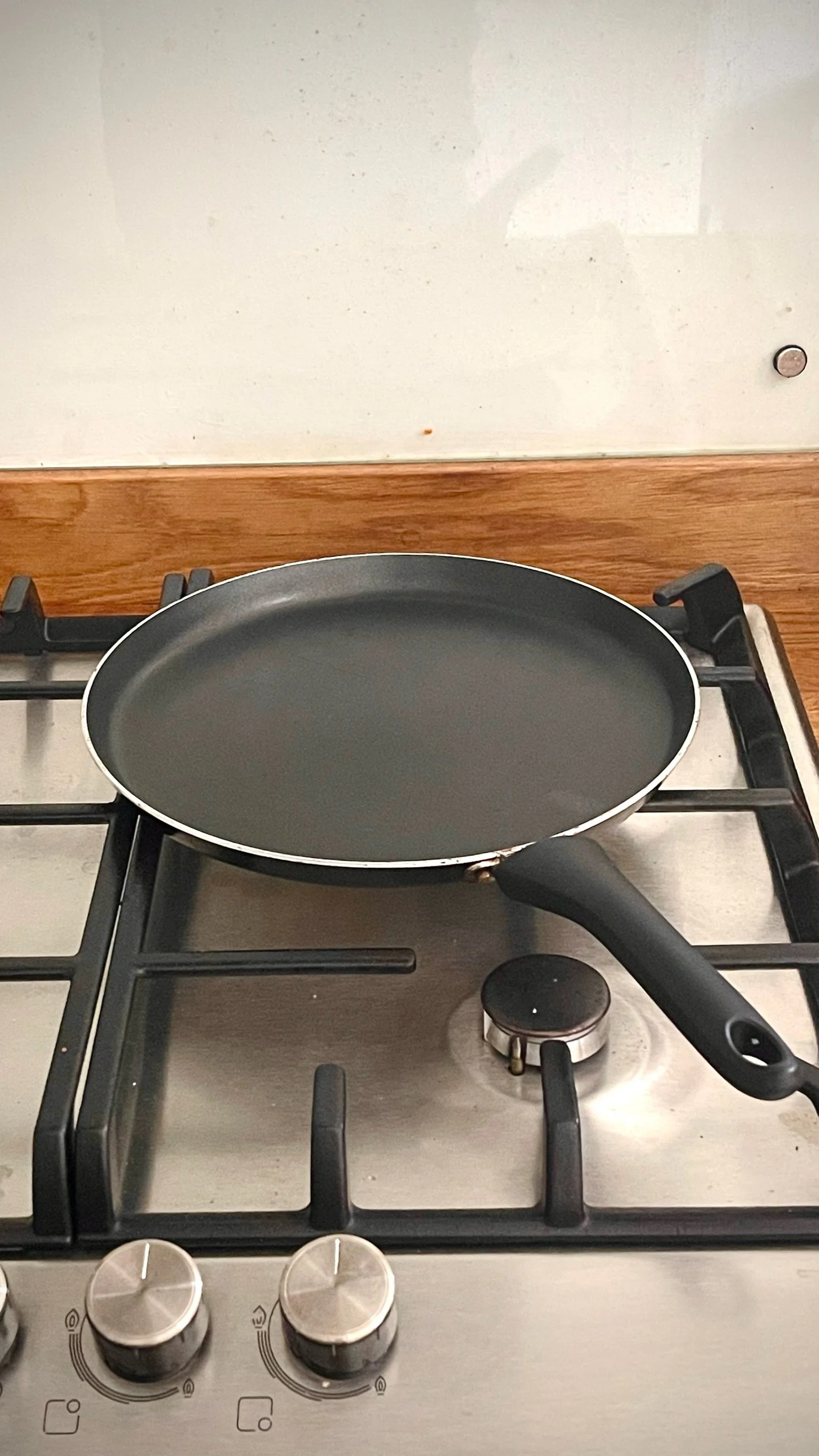
The crêpe pan is the most versatile piece of cookware in the van and the one we’d be most reluctant to leave behind. Wide, flat-bottomed, properly non-stick, it makes crêpes obviously but it also makes the best fried eggs we’ve cooked anywhere, neat omelettes, crispy gnocchi, and anything that benefits from a wide even surface and good heat distribution. It came from the café kitchen instinct and it was the right call.
A decent, non stick pan nest is invaluable
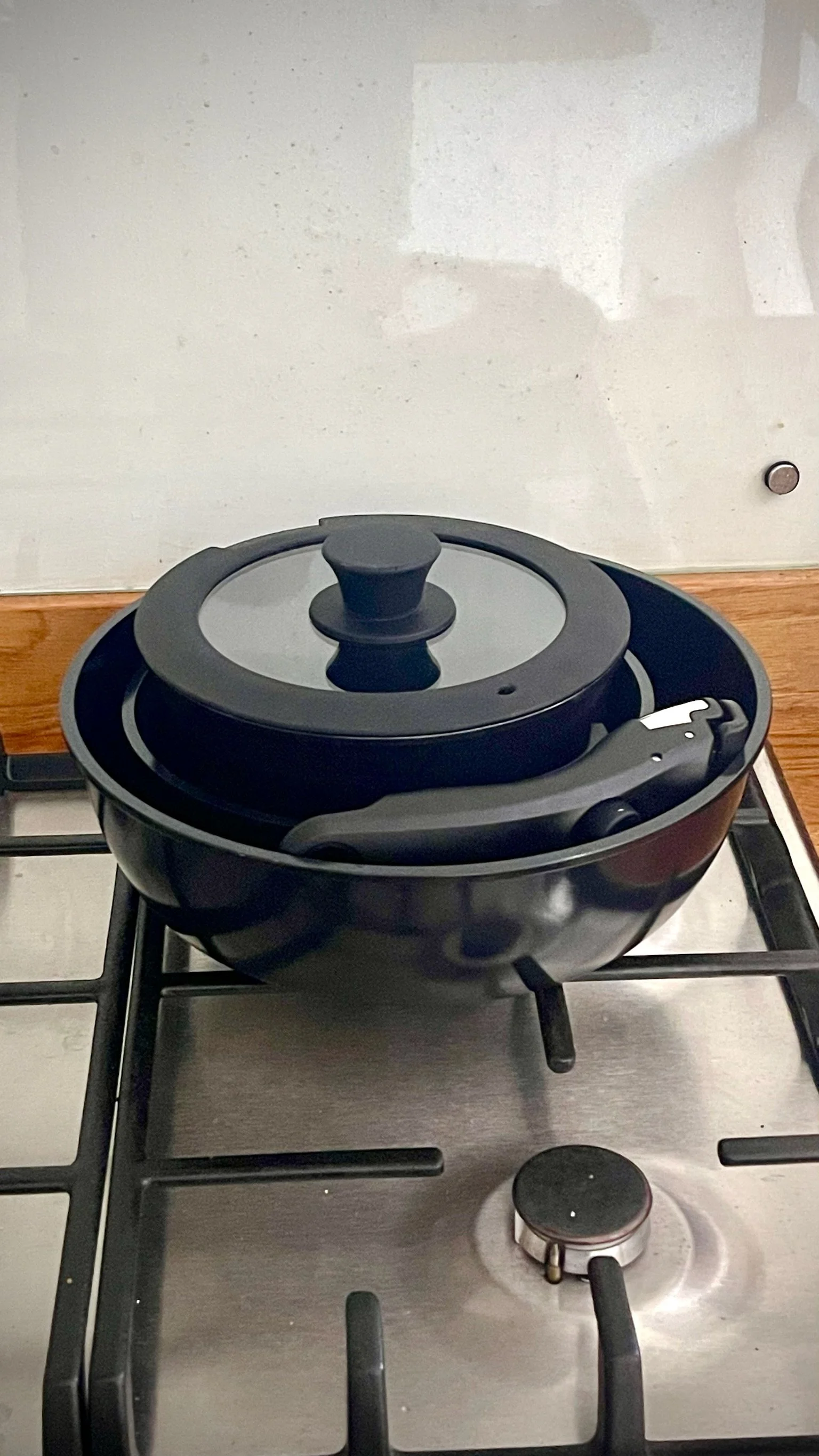
Alongside it, a nest of two or three non-stick saucepans of different sizes that stack inside each other and take up the space of one. The largest is for pasta or a generous frittata. The middle one for most things. The smallest for heating soup or beans at lunchtime. They need to be genuinely non-stick – a pan that sticks in a house kitchen is an inconvenience, in a van with limited water and no dishwasher it becomes considerably more annoying.
The IKEA ceramic mugs – a small but firm position
We use IKEA 365 ceramic mugs, which hold a proper amount of coffee, feel right in the hand, and look like a mug is supposed to look. We have four in the van and have broken exactly none of them in ten months of trips. They live in the kitchen cupboard wrapped in Dock & Bay tea towels between them as padding, and they have survived everything including the 2,500 mile trip to and from France in January.
A coffee (and of course tea) does taste better from a proper ceramic mug – this is not just sentiment, it is about temperature retention and the absence of any aftertaste from metal or plastic. We feel fairly settled on this.
The French Duralex glasses
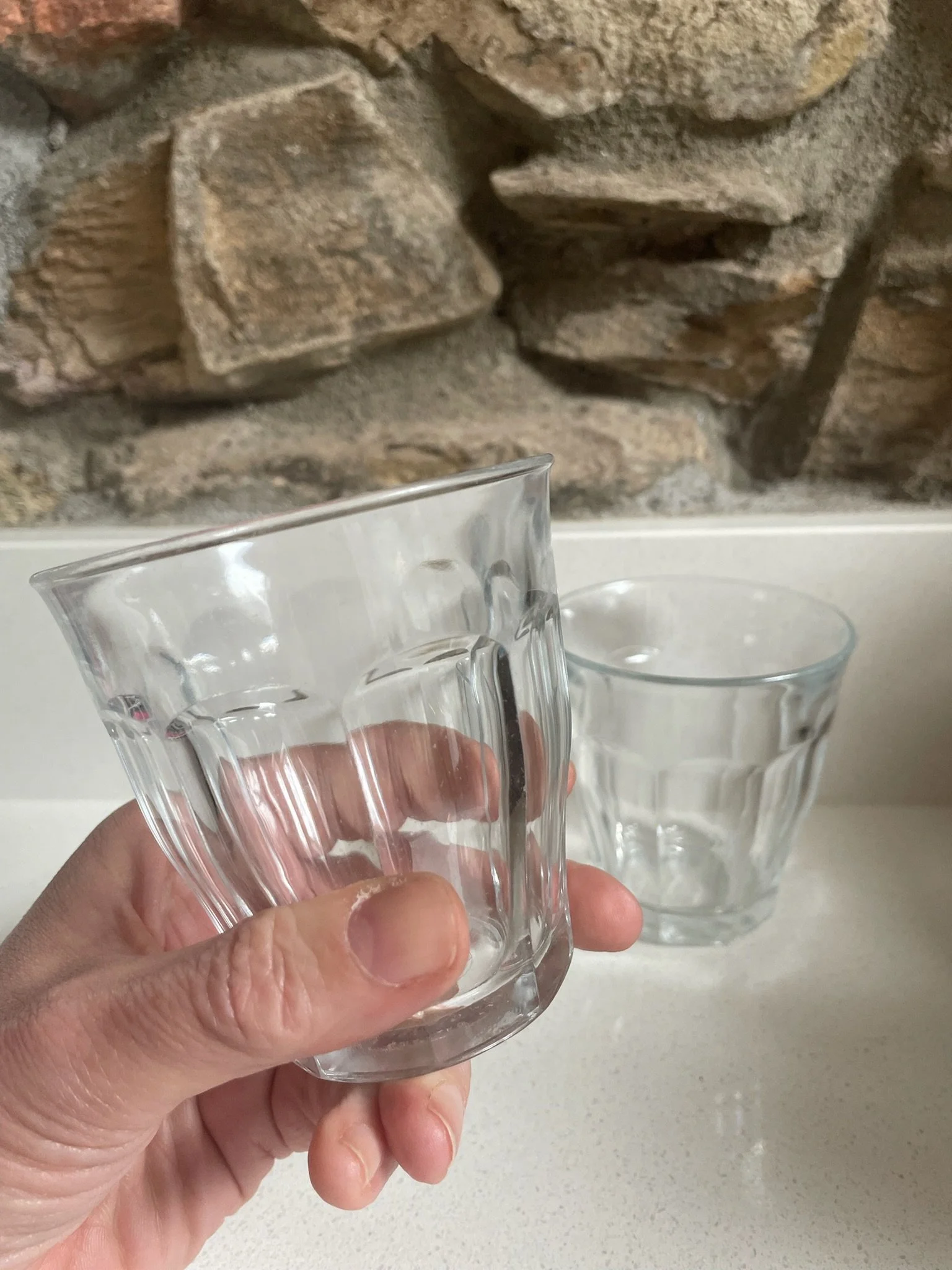
For glasses, we use Duralex tumblers – the thick, dimpled, classic French tumblers that have been made the same way since 1945 and are essentially indestructible by van standards. No stems – stems in a van are an anxiety waiting to happen. A tumbler sits flat, sits stable, and lives in a cupboard without drama. They are protected between trips with felt protectors rather than dividers, which keeps them from knocking together without adding bulk.
There is also something deeply right about drinking a glass of French wine from a Duralex tumbler on a warm evening outside the van. It is what the French do in every simple restaurant and campsite canteen. We are entirely in favour of it.
Knives – a proper set in a roll
Good knives in a protective roll, so the edges stay sharp and nothing gets damaged in transit. We carry four: a proper chef’s knife for almost everything, a bread knife – particularly important in France where a proper baguette deserves a proper cut rather than being hacked at with something inadequate – a cheese knife, because when in France, and a small serrated knife for tomatoes and anything else that benefits from a serrated edge. Four knives in a roll take up very little space and make cooking in the van considerably more enjoyable than the alternative.
The spice system – decanted and labelled
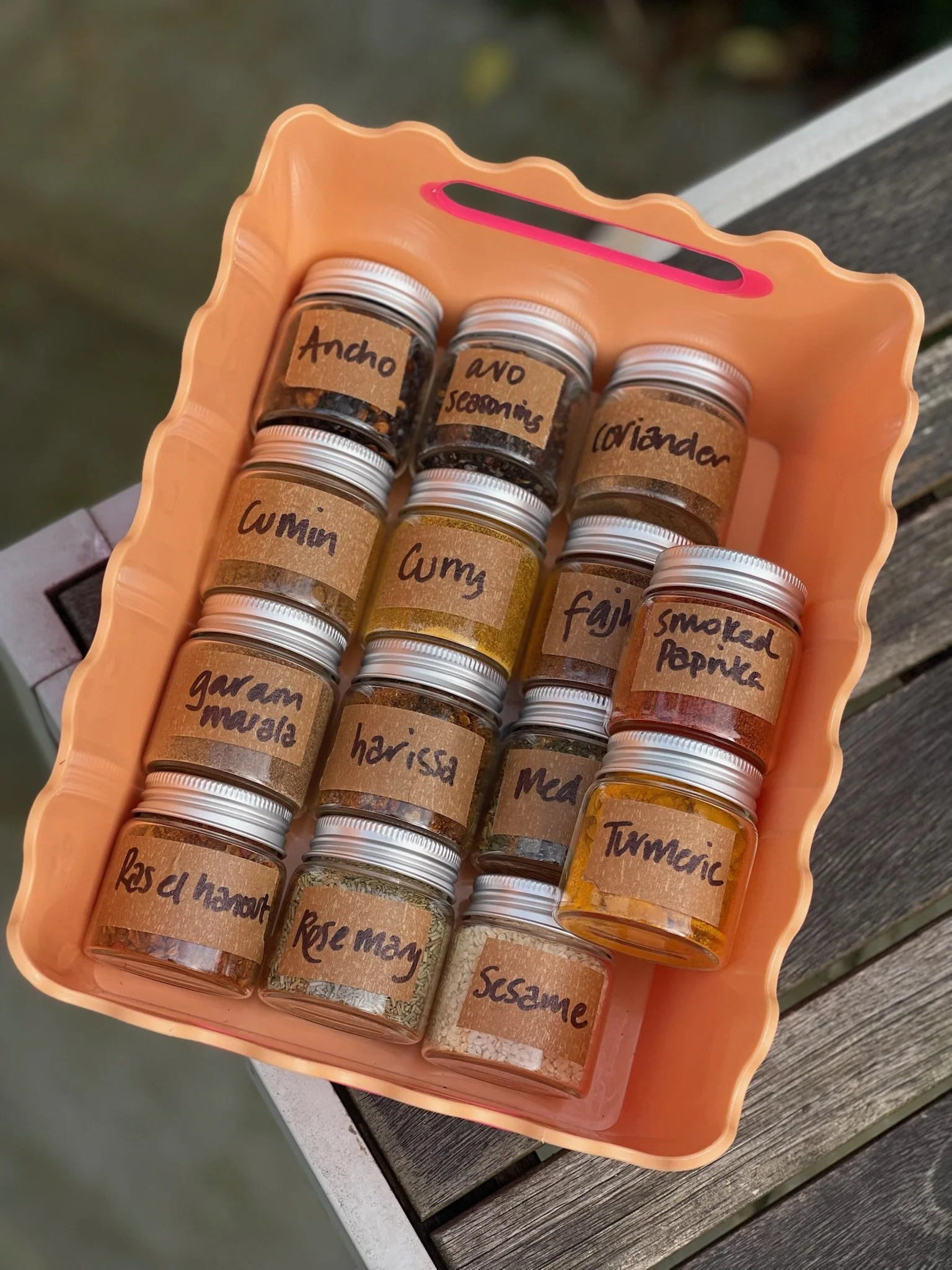
I’ve decanted my most used herbs and spices from their original packets and jars into small glass jars - labelled clearly, stored together in a small tub that lives in the van kitchen cupboard. The original packets take up three times the space, fall over, and have those fiddly lids that either pour too much or nothing at all depending on the moment. The small jars seal properly, stack neatly, and take up way less space than standard supermarket spice jars. We have smoked sea salt in its own dedicated jar always, chipotle chilli flakes, turmeric, smoked paprika, cumin, coriander, mixed herbs, garlic granules, garam masala, Chinese five spice, and a small pepper grinder for black pepper. We are a bit obsessed with freshly ground black pepper. And smoked Cornish sea salt to be fair.
Smoked Salt from Cornwall - we are obsessed
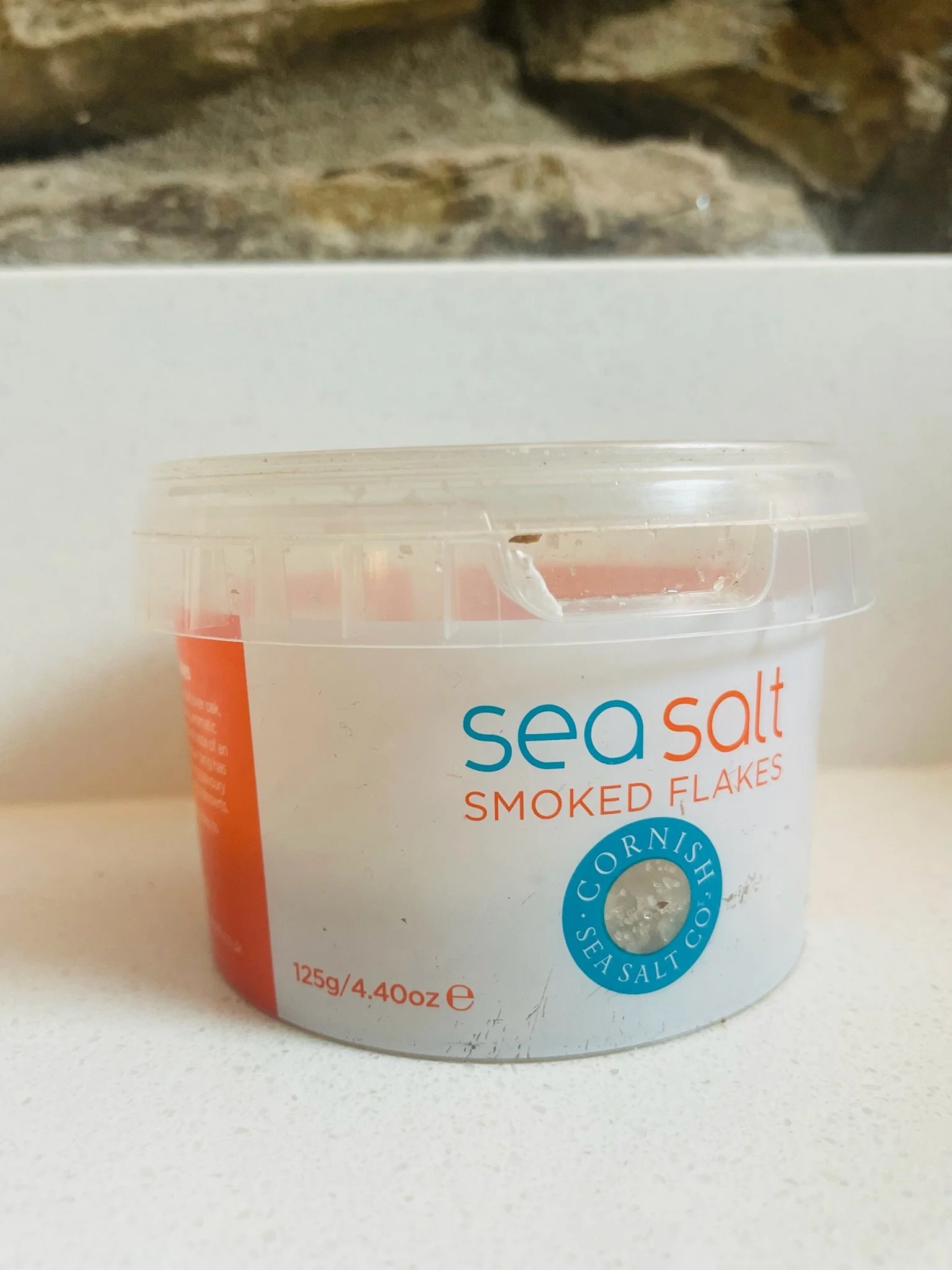
Smoked Cornish sea salt - I will never stop going on about this and I will never stop using it. I use it on everything, all the time. Every day. It’s truly magnificent.
Felt dividers - to stop the rattles
These are great to place between the ceramic cups, the Duralex glasses and to stop pans and plates rattling when driving. They take up no room either when not in use.
The collapsibles – anything that folds flat when not in use
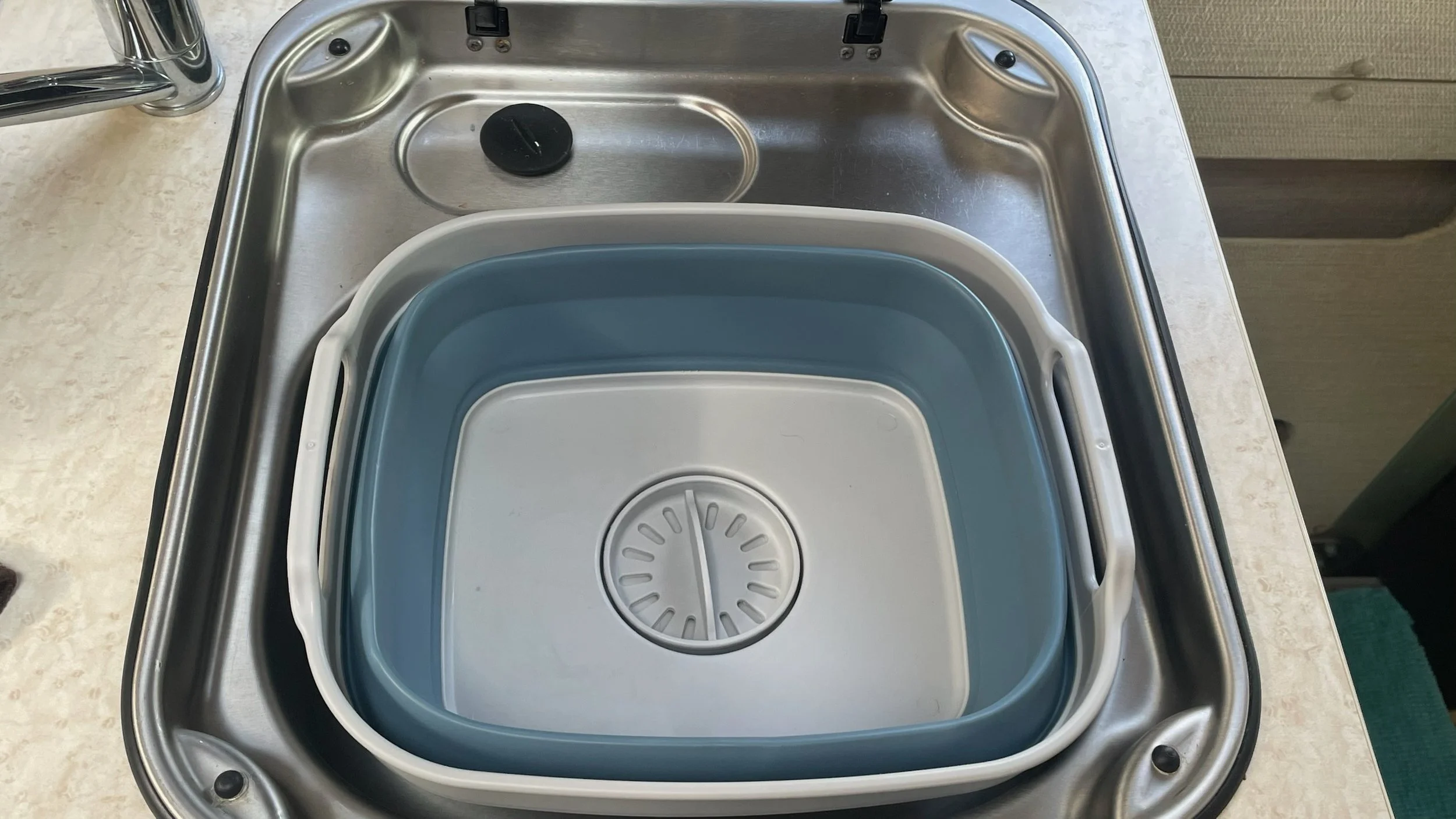
Collapsibles have changed our cupboards. Every item that folds flat when not in use is an item that does not occupy precious storage space between uses, and in a van that trade-off matters more than it does at home. A collapsible colander takes up the space of a dinner plate when flat. A collapsible washing-up bowl does every job a full-sized bowl does when open and disappears into the sink space when closed. A collapsible bucket lives under the sink for the occasional job that genuinely needs one. None of these are exciting. All of them are worth having, and the quality has caught up considerably with the concept in recent years.
Keeping things fresh – bread bags and beeswax wraps
A linen or cotton bread bag keeps a baguette fresh considerably longer than the paper bag it came in – the crust stays crisp, the inside stays soft, and we always bring the morning baguette back in it. A small detail that makes a real difference, particularly on a longer trip where you might not be buying bread every single day.
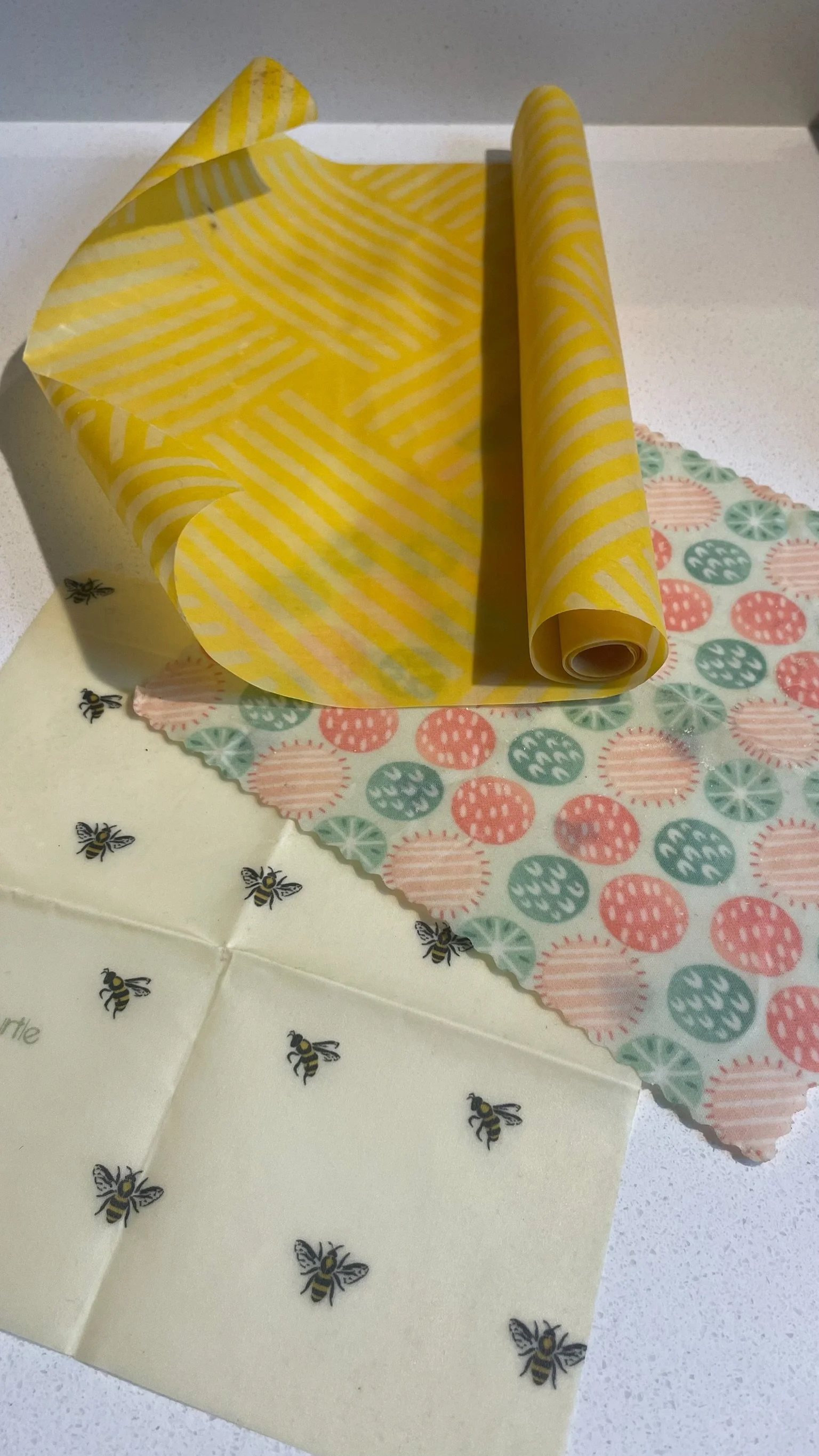
Beeswax wraps instead of cling film for wrapping cheese – and then put it the clip-lock container - or keeping half an onion fresh or a halved lemon. Reusable, washable in cold water and genuinely effective. And a string bag on a hook for fruit, which keeps everything separate and aired and prevents the rolling-around problem that turns a perfectly good peach into a sad and bruised affair that no one wants to eat.
The washing-up kit
Squeezy bottles for dish soap and hand soap, both decanted from large bottles at home rather than bought in separate small travel sizes. A good scrubbing brush with stiff natural bristles for vegetables – French markets produce the kind of muddy, earthy, beautiful produce that requires a proper scrub rather than a rinse. A small whisk for omelettes and sauces. A microplane for parmesan and lemon zest, which earns its small space emphatically. A veg peeler that actually works. A set of small silicone oven mitts for the hob and oven. Kitchen roll hanging in a small string bag and paper napkins in the kitchen drawer. Matches for the hob igniter on its occasional difficult mornings. Tin opener, bottle opener, corkscrew – these three before anything else and always checked before departure.
The Champagne stopper
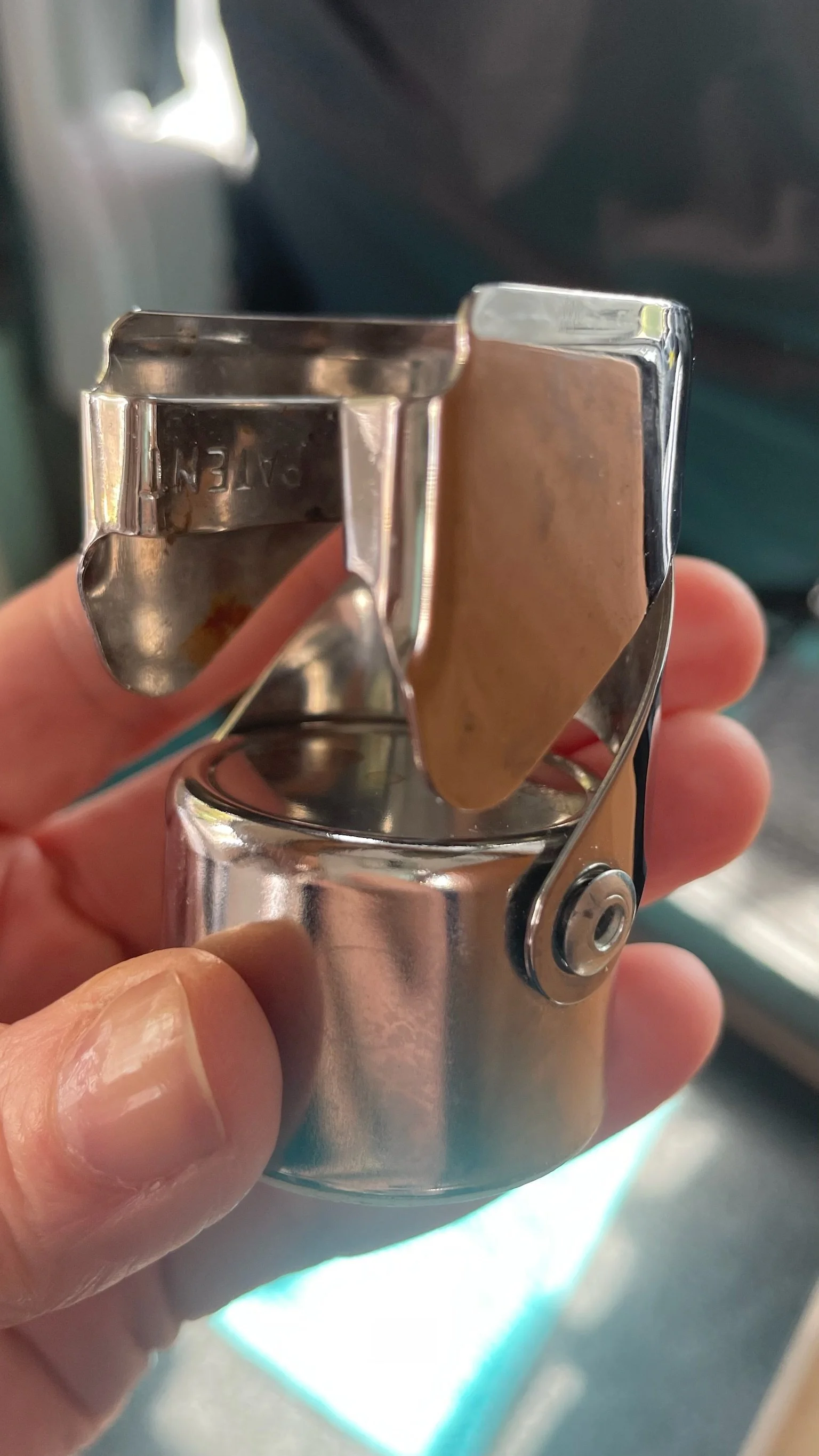
We are not big drinkers, but when in France we do like the occasional a glass of Cremant (a cheaper and often better version of Champagne and this was my mums favourite so it’s my tribute to her) but we never manage to finish a bottle, so this is a brilliant way of keeping the fizz for another night.
The rest of the crockery – bamboo plates and photocopied recipes
Two bamboo plates and Two bamboo bowls for casual and outdoor eating – lightweight, genuinely unbreakable, and they stack easily. Proper cutlery in a cutlery drawer rather than the camping kind, because there is no good reason to eat well-cooked food off cheap, bendy cutlery. A proper-sized chopping board that fits on the work surface with room to actually use it – a small one that is technically a chopping board but functionally inadequate is one of the quiet miseries of van cooking and not worth inflicting on yourself.
And half a dozen favourite simple recipes, photocopied or printed and kept in a slim folder in the kitchen drawer. Phone screens steam up, dim and go to sleep at the critical moment. Paper does none of these things and never needs charging. It is a very small piece of organisation that pays for itself every time you are trying to remember how much stock goes in a risotto with your hands covered in onion.

Butter wouldn’t melt
Kate, Charlie, Huffle & Brigitte
Kettle & Keys
comfort, wherever you park up.
links in this post are affiliate links. This means if you buy through them, we earn a small commission – at absolutely no extra cost to you. We only ever link to things we have genuinely used and would recommend to a friend regardless. It’s one of the ways we keep Kettle & Keys running, and we’re grateful for every click. Thank you for supporting us.