
12. Leftover alchemy: one dish two or three ways
The van fridge is small. The hob has two burners. Every ingredient needs to earn its place across more than one meal. This is how we do it.
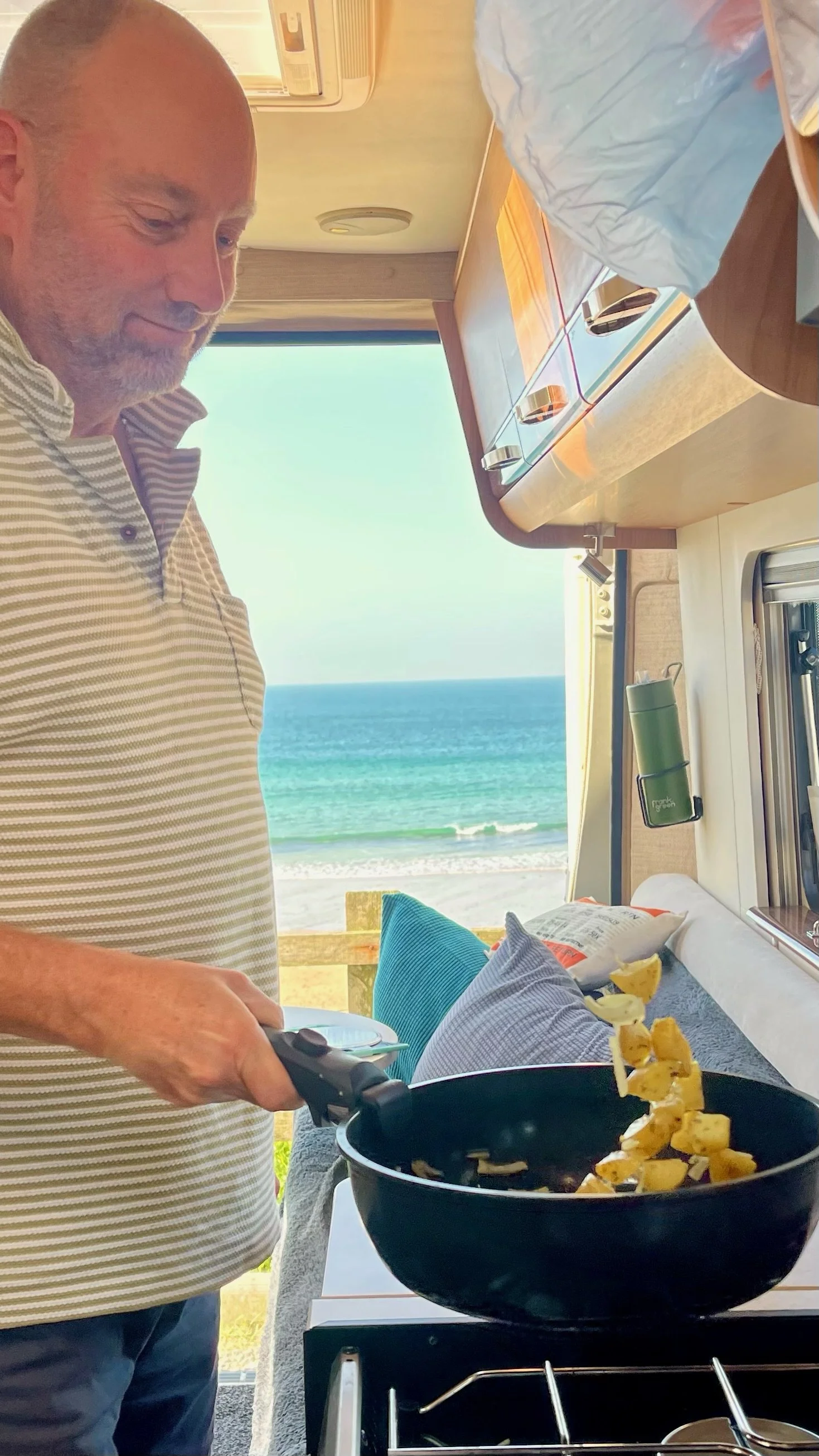
We're Kate and Charlie – mid-fifties, one anxious dog called Huffle, one fifteen-year-old Peugeot Boxer campervan called Brigitte, and absolutely learning as we go. Whether you have a campervan or a motorhome, if you're new to this or thinking about it, come with us.
There is a particular kind of satisfaction that comes from opening the van fridge on day two, looking at what remains from the night before, and knowing exactly what to make. Not making do or compromising. Actively choosing to cook something better than if you'd started from scratch – because constraints make you think creatively in a way a fully stocked kitchen at home rarely demands of you.
We ran a café in Cornwall for seven years. The discipline of using everything, wasting nothing, and making the most of what you have is baked into how we cook – not as a chore but as a pleasure. The van is the purest expression of that philosophy. Small fridge, limited storage, two hobs, and the requirement that every ingredient earns its place across more than one meal.
What follows is not a list of recipes so much as a collection of ideas about how food travels – how one good thing, cooked well on day one, becomes something equally good but entirely different on day two or three. This is leftover alchemy. It is one of the very best things about cooking in a van.
The rotisserie chicken – three meals, one bird
We have written about this before, and we will keep writing about it, because the French rotisserie chicken is one of the greatest van kitchen meals available to the travelling cook. Available in virtually every French supermarket and many markets, relatively cheap, already cooked, and possessed of a flavour that no home oven quite replicates. It is one of our most-used van ingredient and the one we recommend without hesitation to anyone heading to France.
The trick is to think of it not as one meal but as three, planned from the moment you buy it.
Day one – rotisserie chicken, baguette, butter and Dijon

This is barely a recipe. It is an assembly, and it is magnificent for exactly that reason. The chicken has just come off the rotisserie. It is warm. The baguette was bought this morning. This is not the moment for anything complicated.
· Half a rotisserie chicken – pull the breast meat and legs apart at the table
· One good baguette, torn rather than sliced
· Thick French butter, very cold
· Dijon mustard – the real thing, bought in France
· A bowl of dressed salad leaves – a shake of olive oil, a squeeze of lemon, salt
1. That is genuinely it. Butter the bread thickly. Tear the chicken. Smear the mustard. Smoked salt and freshly ground pepper. Eat with the salad alongside and something cold to drink.
Kate's note: I make a jar of vinaigrette dressing at home and always take it with me on trips
Day two – chicken fried rice
Packet cooked rice works well here – it is already dry enough to fry properly, which is exactly what you want. If you are using leftover cooked rice, spread it on a plate and leave it in the fridge uncovered for a few hours first. Cold, slightly dried-out rice fries far better than freshly cooked.
· Leftover chicken, pulled into pieces
· 1 packet of cooked rice, or leftover rice from the night before
· 1 small onion, finely sliced
· 1 clove of garlic, minced
· A handful of frozen or tinned peas/sweetcorn
· 1 egg
· For the sauce: gochujang, soy sauce, maple syrup, lime juice, sesame oil, ginger paste, garlic paste, white miso paste – mixed together in a small jar. Or a Wagamama sauce if ease is winning over ambition.
· To finish: sesame seeds, spring onions, salted peanuts, fresh coriander if you have it.
1. Heat oil in your largest pan until properly hot. Fry the onion for three or four minutes until softening and beginning to colour.
2. Add the garlic and fry for another minute. Add the cold rice and press it into the pan – you want it to catch slightly, to get some colour and texture.
3. Add the chicken pieces and after a few minutes the peas. Stir everything together.
4. Push the rice to one side, crack in the eggs, scramble them briefly in the cleared space, then fold through the rice before they are completely set.
5. Add the sauce – enough to coat everything generously. Toss together over high heat for a final minute.
6. Pile into bowls and finish with sesame seeds, spring onions, peanuts and coriander.
Kate's note: Reheating rice and chicken can be dangerous if you don’t heat it to a high temperature throughout. Bacteria grows quickly when food is lukewarm. We also use a food temperature probe when reheating rice and chicken. Your temperature needs to be minimum 74 degrees
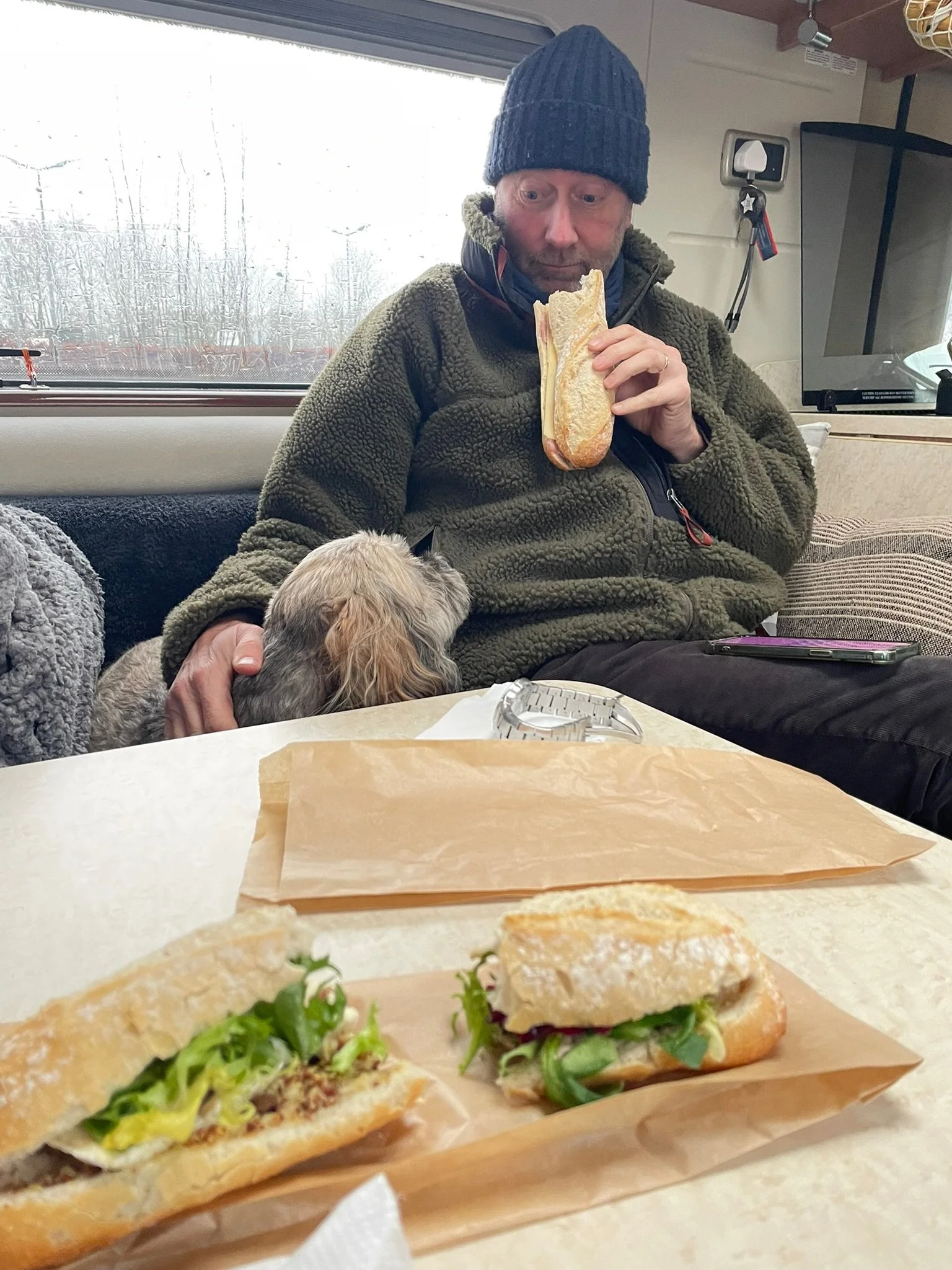
Day three – chicken, pesto and rocket baguette
By day three the chicken is almost gone. What remains – the last pulled pieces, the bits from the carcass – is exactly enough for the best sandwich of the trip.
· Last of the pulled chicken
· A fresh baguette from this morning's boulangerie
· Good quality pesto – from a jar is perfectly fine
· A handful of rocket
· Optional: a few shavings of parmesan, a squeeze of lemon
1. Split the baguette. Spread pesto generously on both sides – don't be shy.
2. Pile the chicken on one side, then the rocket, then the parmesan if using.
3. A small squeeze of lemon over the rocket. Close the baguette. Press down firmly.
4. Eat immediately, ideally sitting outside somewhere beautiful.
Kate's note: This is also excellent with leftover roasted vegetables in place of the chicken, which brings us neatly to the next section.
The pantry pasta – one sauce, two meals
This is the recipe that lives permanently in our van store cupboard philosophy. Every ingredient keeps indefinitely in a tin or a jar. Nothing needs refrigerating before opening. It can be on the table in the time it takes to boil water and cook pasta – which in a van, where the gas hob takes a few minutes to get going, is about fifteen minutes.
The magic of this particular combination – olives, capers, roasted red peppers, lemon, garlic, good olive oil – is that it is more than the sum of its parts. It tastes like something you ordered somewhere and have been trying to recreate ever since. And it makes enough for two completely different meals.
Meal one – pantry pasta
· 180g dried pasta – spaghetti or linguine works best
· A small handful of pitted olives, roughly chopped
· 1 tablespoon of capers, drained
· 1 roasted red pepper from a jar, drained and sliced
· Zest of half a lemon – and a squeeze of juice
· 1 clove of garlic, very finely sliced
· 1 glug of good extra virgin olive oil
· Salt – smoked Cornish sea salt if you have it.
· Optional: a pinch of chipotle chilli flakes, a handful of chopped fresh parsley or basil if you have it
1. Cook the pasta in well-salted boiling water until just al dente. Reserve half a mugful of pasta water before draining.
2. While the pasta cooks, warm the olive oil in a pan over medium heat. Add the garlic and let it soften – two minutes, no colour.
3. Add the olives, capers and red peppers. Stir together and warm through for another two minutes.
4. Add the drained pasta to the pan with a splash of pasta water. Toss everything together – the starchy water helps the oil cling to the pasta.
5. Remove from heat. Add the lemon zest, a squeeze of juice, smoked salt and pepper. Finish with a final drizzle of olive oil.
Kate's note: You can double this recipe and make more of the olive, caper and pepper mixture than you need for the pasta. The surplus keeps in a jar in the fridge for two days or becomes tomorrow's meal.
Meal two – the same sauce over roasted vegetables and couscous
The leftover sauce has had a night in the fridge and the flavours have deepened and mellowed. It no longer needs pasta – it is happy to become a dressing, a drizzle, something that brings a whole different meal to life.
· 1 mug of couscous
· Whatever vegetables need using – courgette, pepper, red onion, cherry tomatoes all work well
· The leftover olive and pepper sauce from yesterday
· A squeeze of lemon to refresh or a tin of chopped tomatoes
1. Chop the vegetables roughly, toss in olive oil and salt, and roast in your van's oven if you have one – or cook in a dry frying pan over medium-high heat, turning occasionally, until soft and catching colour at the edges.
2. Pour boiling water over the couscous – just enough to cover by a centimetre or so. Put a plate on top and leave for five minutes. Fluff with a fork and season well.
3. Pile the couscous into bowls, top with the roasted vegetables, and spoon the leftover sauce generously over everything. A squeeze of fresh lemon to wake it all up.
Kate's note: This also works brilliantly cold the next day as a packed lunch. The couscous absorbs the sauce overnight and it genuinely improves. Always fluff couscous with a fork – a spoon makes it stick together and go claggy.
Chilli non carne – the one that keeps giving
A good veggie chilli is one of the great van meals – warming, filling, deeply savoury, and possessed of the particular quality of tasting better on the second day than the first. We make ours with Puy lentils and mushrooms rather than tinned beans, which gives it a meatier texture and a depth that surprises people who weren't expecting to be impressed by a vegetarian chilli.
It also, crucially, turns itself into three entirely different meals without any additional cooking required beyond reheating.
The base chilli – Puy lentils and mushrooms
· 200g Puy lentils, rinsed
· 250g mushrooms – chestnut or portobello, roughly chopped
· 1 onion, diced
· 2 cloves garlic, minced
· 1 tin chopped tomatoes
· 1 roasted red pepper from a jar drained and chopped
· 1 tablespoon tomato purée
· 1 teaspoon each: cumin, smoked paprika, chilli flakes – adjust heat to taste
· 250-350ml vegetable stock – a cube is fine
· Smoked Cornish sea salt and pepper to finish
1. Soften the onion in oil for five minutes. Add the garlic and spices and fry for another minute until fragrant.
2. Add the mushrooms and cook until they release their liquid and begin to colour – about five-ten minutes.
3. Add the lentils, tomatoes, tomato purée and stock and roasted red pepper. Stir well, bring to a simmer and cook for 25–30 minutes until the lentils are tender and the sauce has thickened.
4. Taste and season. The smoked salt here makes a genuine difference – it adds a background warmth that echoes the spices.
Meal one – chilli with packet rice, guacamole and coriander
· The chilli
· 1 packet of cooked rice, heated
· 1 ripe avocado, mashed with lime juice, salt and a pinch of chilli
· Fresh coriander, roughly torn
· A squeeze of lime over everything
1. Heat the chilli. Heat the rice thoroughly (to a min of 74 degrees). Mash the avocado simply – it doesn't need to be smooth, just roughly combined with the lime and salt.
2. Rice in the bowl, chilli on top, guacamole alongside, coriander scattered over, lime squeezed over everything. Done.
Kate's note: If you have soured cream or crème fraîche, a spoonful on top is the difference between very good and genuinely great. French supermarkets reliably stock crème fraîche even in the smallest villages.
Meal two – chilli on French supermarket potato wedges
This is, objectively, a brilliant use of leftover chilli and one that we feel reflects well on us as people.
· Leftover chilli, reheated
· A bag of fresh French supermarket potato wedges – the fresh ones from the chilled section, not frozen
· Soured cream or crème fraîche
· Fresh coriander if remaining
1. Cook the wedges according to the packet – in the van oven if you have one, or in a dry frying pan with a lid on medium heat, turning occasionally.
2. Pile onto a plate. Spoon the reheated chilli generously over the top.
3. A dollop of crème fraîche. Whatever coriander remains.
Kate's note: Nacho chips work equally well in place of the wedges – and require no cooking whatsoever, which on a tired evening is a winner.
The pesto jar – two very different meals
A good quality jar of pesto is one of the most versatile things in the van cupboard. Not the cheapest jar – the one that actually tastes of basil and pine nuts and parmesan rather than generic green. It costs a little more. It is worth every penny across the two meals it produces.
Meal one – pan-fried gnocchi with pesto
Pan-frying gnocchi rather than boiling it produces something considerably better – crispy on the outside, pillowy within, with a texture that holds up to a coating of pesto in a way that boiled gnocchi never quite manages.
· 1 packet of gnocchi
· 3–4 tablespoons of good pesto
· A knob of butter
· Salt and black pepper
· Parmesan to finish if you have it
1. Heat butter and a little oil in a pan until foaming. Add the gnocchi in a single layer – do not crowd the pan.
2. Leave them completely alone for two minutes until a golden crust forms on the bottom. Turn and repeat on the other side.
3. Remove from heat, add the pesto and toss to coat. Season well.
4. Serve immediately with parmesan shaved over the top and a salad on the side.
Kate's note: The key to this is patience. Do not stir the gnocchi. Let it crust. The temptation to fiddle is strong and must be resisted.
Meal two – pesto, roasted pepper and caramelised onion pasta sauce
The remaining pesto in the jar – there is always remaining pesto in the jar – becomes the base of a pasta sauce that tastes like something from a good Italian restaurant and takes about as long as the pasta takes to cook.
· Remaining pesto from the jar
· 1 tin of chopped tomatoes
· 1-2 roasted red peppers from a jar drained and sliced
· 1 large onion, very finely sliced
· A pinch of sugar
· Pasta of your choice
Smoked salt and pepper
1. The onion is the important part. Slice it finely and cook it slowly in olive oil over low heat for at least ten minutes, stirring occasionally, until it is soft, sweet and beginning to turn golden. Add a pinch of sugar and cook for another five minutes. This cannot be rushed.
2. Add the roasted peppers and stir together for a minute.
3. Add the tinned tomatoes and simmer for ten minutes until the sauce thickens slightly.
4. Remove from the heat and stir through the remaining pesto. The residual heat is enough – you don't want to cook the pesto or it loses its freshness.
5. Toss with cooked pasta. Season with smoked salt and, if you have it, a generous grating of parmesan.
Kate's note: The caramelised onion is the making of this sauce. If you are short on time or patience, it is still good. If you give the onion the time it deserves, it is outstanding.
The van frittata – our café bestseller, reimagined
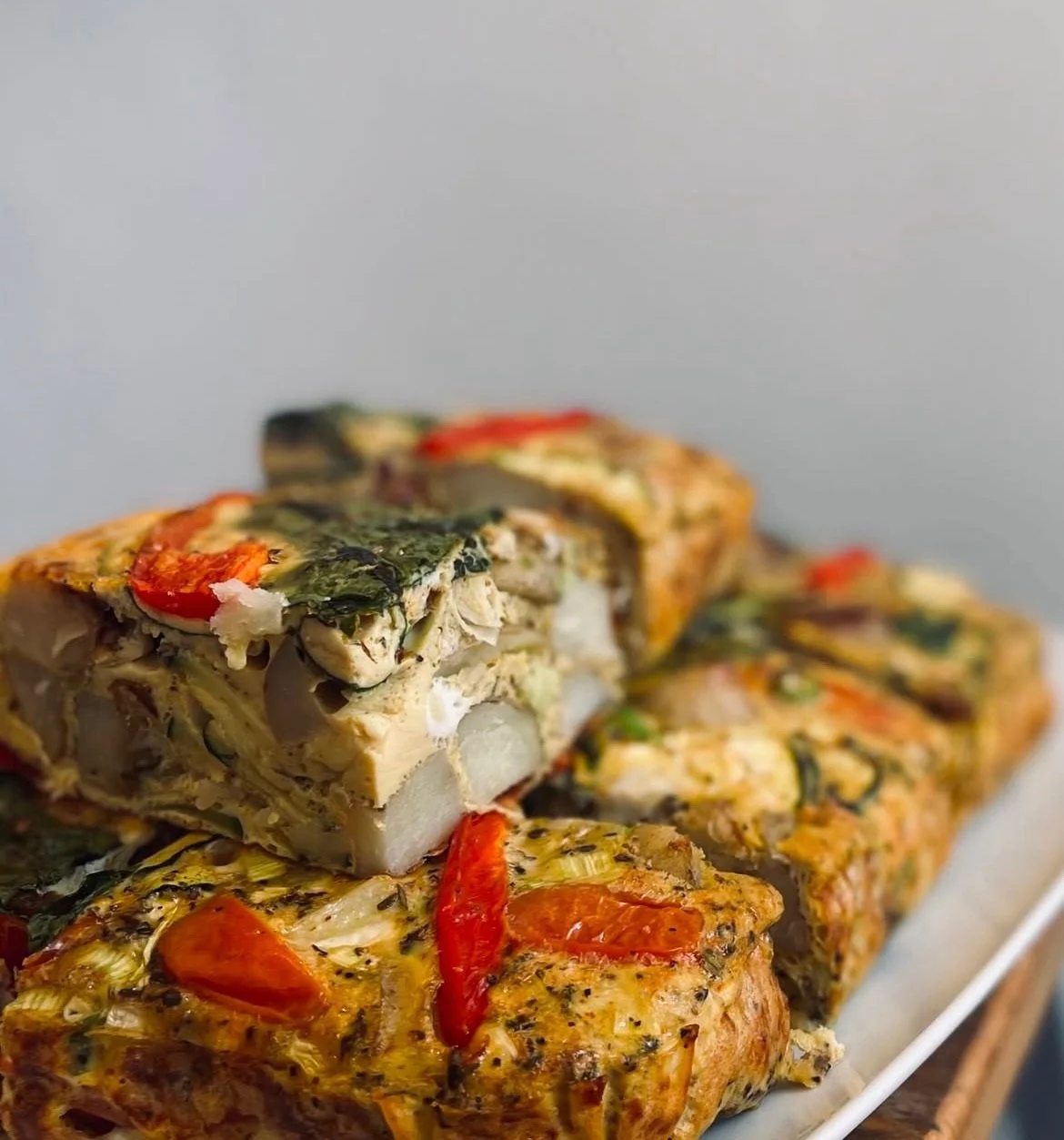
We sold frittata at the café for seven years. It flew out the door every single day without exception, in every variation we tried. The reason is simple: it is one of those dishes that looks considerably more impressive than the effort it requires, uses whatever you happen to have, and tastes genuinely brilliant cold, warm or at room temperature.
In the van it is the ultimate leftover meal – a vehicle for anything in the fridge that needs using, held together by eggs and made into something worth sitting down for.
Van frittata – the formula
This is less a precise recipe than a reliable formula. The quantities are approximate. The vegetables are whatever you have. The only things that I feel must be in the frittata are: eggs, potato, feta, and the smoked salt.
· 6 eggs, beaten with a little salt and pepper
· A handful of small waxy potatoes, cooked and cut into small cubes – or leftover boiled potatoes
· Whatever vegetables need using: courgette, pepper, cherry tomatoes, spinach,– all work well
· 100g feta, crumbled
· Half a leek and a couple of spring onions sliced
· A big pinch of mixed herbs – dried is fine
· Smoked Cornish sea salt to finish
· Lots of black pepper
· Olive oil for the pan
1. Heat olive oil in an oven-safe frying pan over medium heat. If you don't have an oven-safe pan, a heatproof lid will do the job instead.
2. Add the potato cubes and fry until beginning to crisp at the edges – five minutes or so.
3. Add any raw vegetables and cook until just tender. Add any already-cooked vegetables just to warm through.
4. Scatter the feta and herbs over the vegetables. Pour the beaten egg over everything – it should just cover the vegetables. Do not stir.
5. Cook over low-medium heat until the edges are set and the base is golden – about eight minutes. The top will still be slightly wobbly.
6. If you have a van oven, finish under a medium grill for three minutes until the top is just set and beginning to colour. Otherwise, put the lid on the pan and cook on the lowest heat for a further five minutes – it will set in the steam.
7. Slide onto a board. Finish with a generous pinch of smoked salt. Serve in wedges.
I have an oven in my van and tend to bake it all in the oven in a parchement lined baking tray for about 30 mins – until the middle is cooked.
Kate's note: Cold frittata the next day, in a baguette with a little Dijon, is one of the great van lunches. Make more than you think you need.
Two more van kitchen staples
Leftover vegetable soup – the everything soup
Every van trip produces a moment, usually around day four, when the fridge contains an assortment of vegetables that have each been used once and are now looking for a second purpose. This is that purpose.
· Whatever vegetables remain – onion, carrot, courgette, pepper, potato, celery: all fine
· 1–2 cloves of garlic
· 1 litre of vegetable stock – a cube dissolved in boiling water
· Olive oil, salt, pepper
· Optional: a tin of white beans or chickpeas for body, a swirl of pesto or crème fraîche to finish
1. Chop everything roughly – this is not a soup that requires precision.
2. Soften the onion and garlic in olive oil for five minutes. Add everything else and cook for two minutes.
3. Add the stock. Simmer until all the vegetables are completely tender – about twenty minutes.
4. Blend if you have a small hand blender. Leave chunky if you don't – it is equally good either way.
5. Season generously. Finish with a swirl of pesto or crème fraîche and good bread alongside.
Kate's note: This soup is impossible to make badly. If it tastes thin, add more seasoning and a squeeze of lemon. If it tastes flat, add a pinch of smoked paprika. If it tastes good, leave it alone. You can always add in small pasta (macaroni or orzo) for the last ten mins of cooking if you want a slightly more substantial broth style soup.
Leftover porridge pancakes – the morning treat
This one earns its place at the end of the list because it is the most unexpectedly joyful discovery in our van kitchen repertoire. Made too much porridge this morning? Good. Tomorrow's breakfast is already sorted and it is considerably more exciting than porridge.
· Leftover porridge – cold, from the fridge, as thick as possible
· 1 egg per cup of porridge
· A pinch of salt
· Butter for the pan
· To serve: maple syrup or honey, fresh fruit, a spoonful of yoghurt if you have it
1. Beat the egg into the cold porridge until well combined. The mixture should be thick – if it feels too loose, add a tablespoon of oats.
2. Heat butter in a frying pan over medium heat until foaming.
3. Drop spoonfuls of the mixture into the pan – roughly the size of a digestive biscuit. Flatten slightly.
4. Cook for two to three minutes until the underside is golden and the pancake is beginning to set around the edges. Flip carefully and cook for another two minutes.
5. Serve immediately with maple syrup or honey and whatever fruit you have.
Kate's note: These are genuinely, properly delicious – not a worthy use of leftovers but an actual treat that people request. The outside goes crispy. The inside stays soft and slightly creamy. They are, in our honest opinion, better than regular pancakes.
The leftover alchemy philosophy
None of this is complicated. The difference between van cooking that feels like making do and van cooking that feels like a genuine pleasure is almost entirely in the planning – buying with the second meal in mind, cooking with a little more than you need tonight, thinking one day ahead.
The van fridge is small. The hob has two burners. The store cupboard holds perhaps twenty things. Within those constraints, properly applied, there is an extraordinary amount of cooking available – meals that are warm, nourishing, occasionally brilliant, and never a compromise.
Stock the cupboard. Think one meal ahead. Use the smoked salt. The rest takes care of itself.
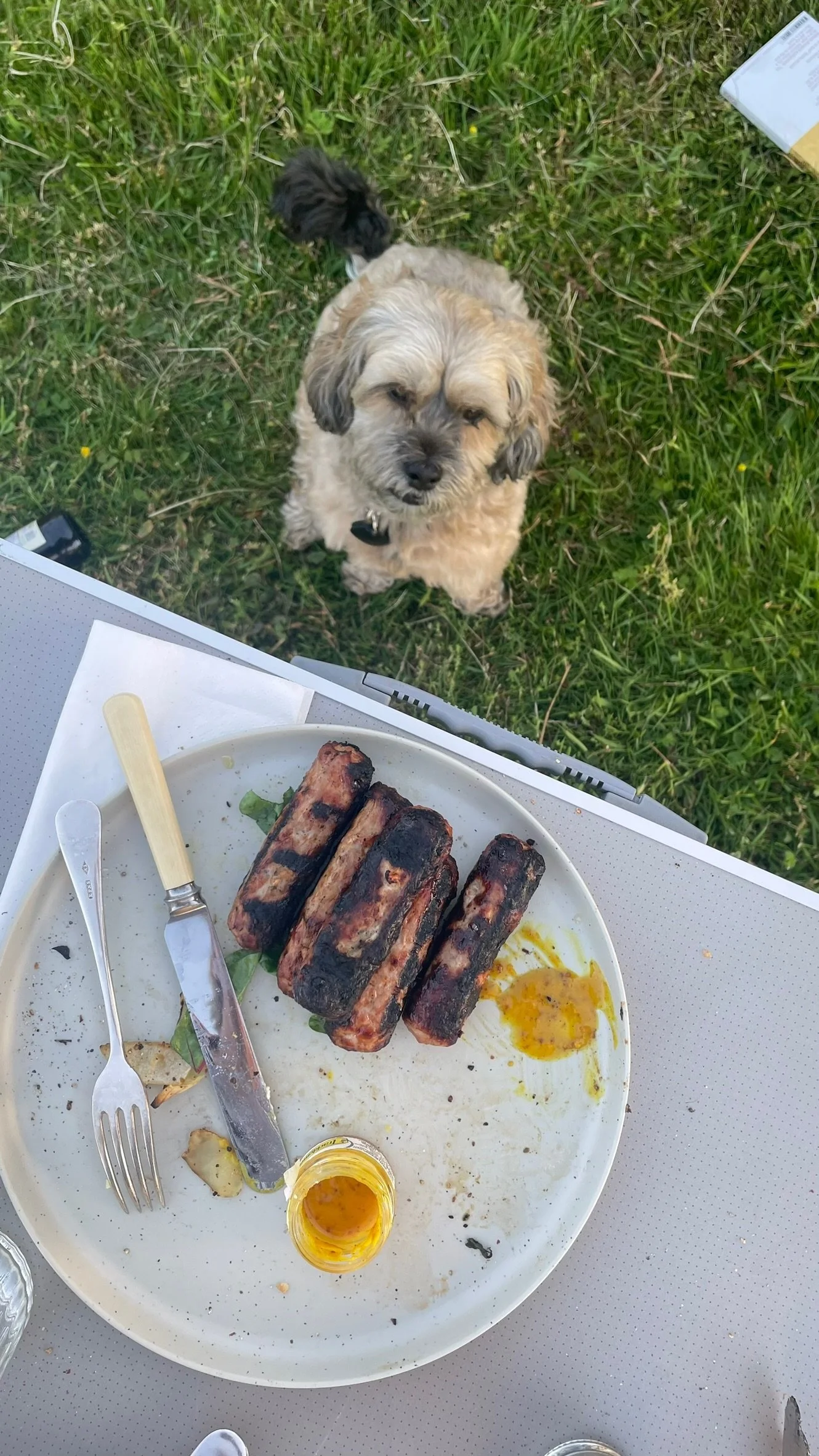
Kate, Charlie, Huffle & Brigitte
Kettle & Keys
comfort, wherever you park up.
Some links in this post are affiliate links, marked with [affiliate]. This means if you buy through them, we earn a small commission – at absolutely no extra cost to you. We only ever link to things we have genuinely used and would recommend to a friend regardless. It’s one of the ways we keep Kettle & Keys running, and we’re grateful for every click. Thank you for supporting us.