
11. Brigitte Bardot, a hillside near St.Tropez, how we named our van
A quiet backwater near Saint-Tropez, a chance conversation with a celebrity’s security guard, and how we chose the van’s name.
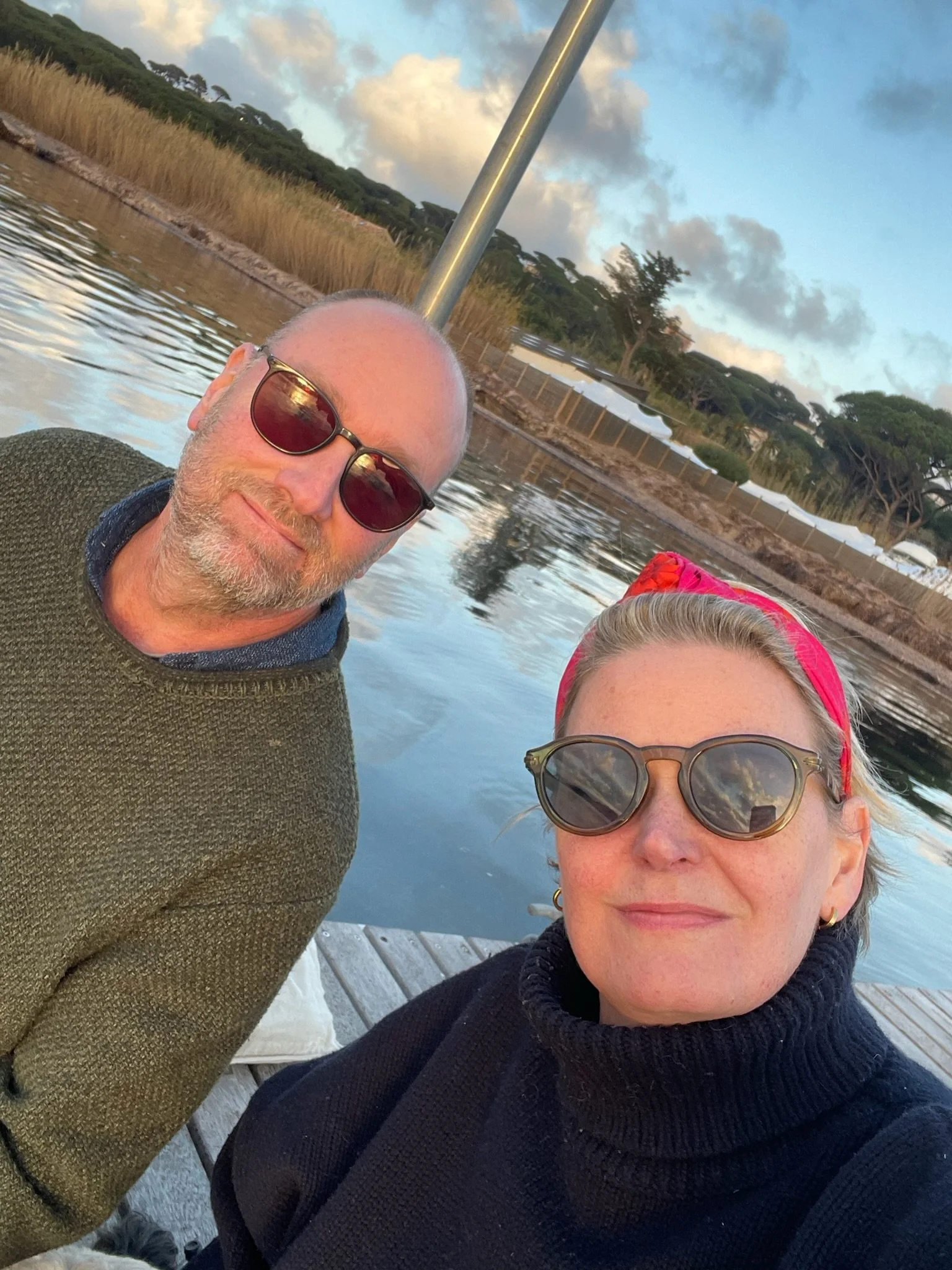
We’re Kate and Charlie – mid-fifties, one anxious dog called Huffle, one fifteen-year-old Peugeot Boxer campervan called Brigitte, and absolutely learning as we go. Whether you have a campervan or a motorhome, if you’re new to this or thinking about it, come with us.
Our van did not have a name when we set off. This felt, at the time, like a minor oversight. A name for the van was something we vaguely thought we’d get around to at some point, if inspiration struck.
On a quiet backwater in the south of France, in the early morning after our first wild camp, with the Mediterranean somewhere below us and the hills behind, two weeks into the best trip of our lives is where we named her.
How it started – in the floods
We left England in January. This was ambitious. We were experiencing what the weather forecasters were describing as ‘significant rainfall’ but feels more biblical. The roads east from Cornwall to Folkstone were running with water. The Le Shuttle terminal was grey and wet and the wind was doing something purposeful and unpleasant.
We drove on anyway. The van - our champagne coloured Peugeot Boxer Autocruise, fifteen years old and entirely unnamed - didn't flinch. Huffle the dog settled in his beanbag between the seats and reconsidered his loyalties briefly, then sat looking anxious. We travelled under the Channel and arrived in France in a snow blizzard, which was not what the forecast had suggested.
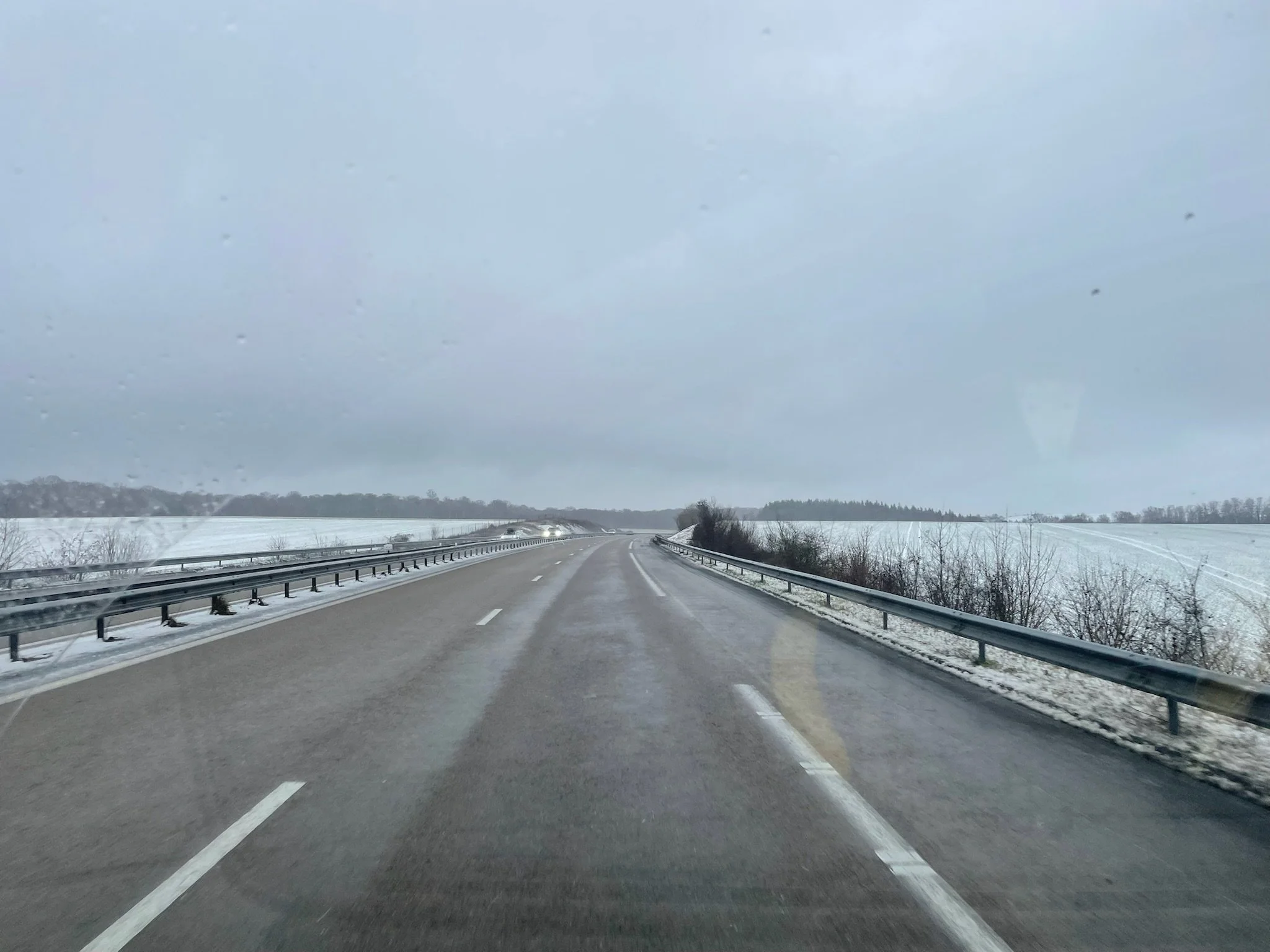
Those first two nights in northern France were cold. Properly cold. We had the heating on, the fifteen-tog duvets pulled up, the ‘sleep hats’ on, and Fred's playlist - Fred is our son, who is twenty-four and considerably cooler than us - playing through the new DAB radio. And it was, despite the cold and the snow and the mild bewilderment, the beginning of something we hadn't quite expected.
The drive south
We drove through Dijon, where the mustard shops were open and the old town was entirely ours because nobody else was there in January – which turned out to be one of the great advantages of going in January. We ate well. We slept well. We stopped when something looked interesting, which is a freedom that motorway travel in a car does not offer and which we were beginning to understand was the entire point.
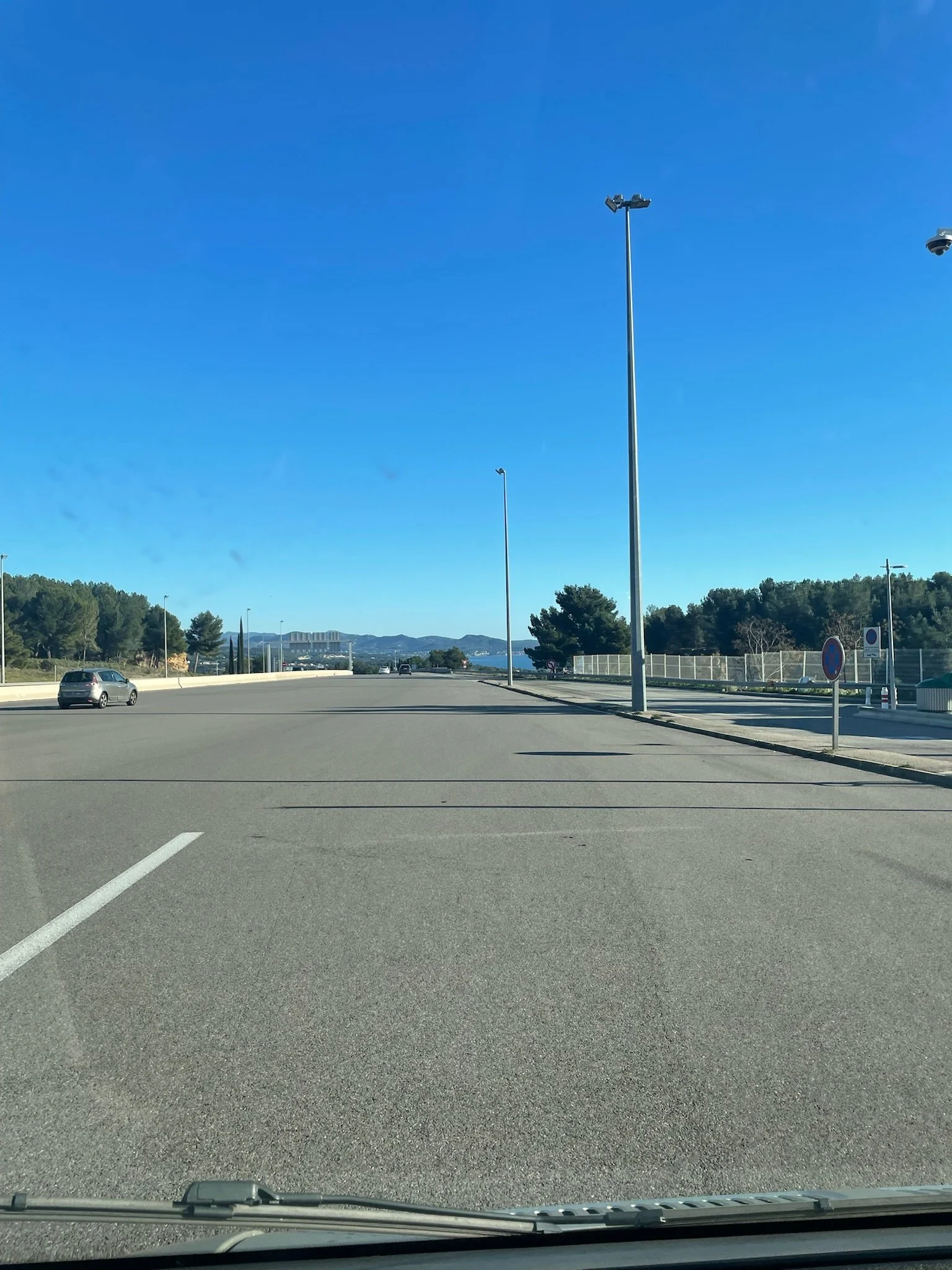
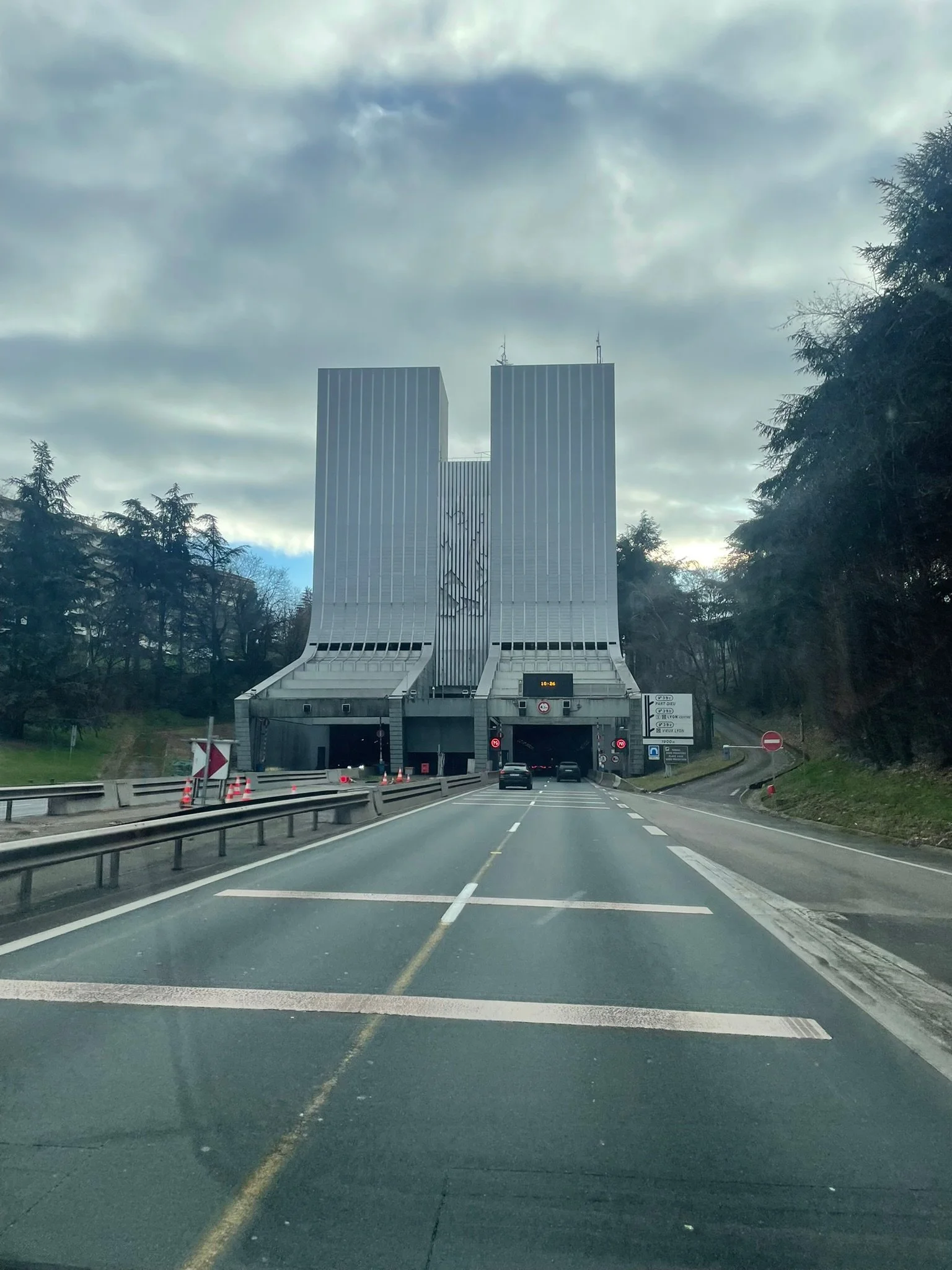
We drove south towards the coast. The weather changed dramatically when we reached Lyon. As we drove through a tunnel heading into Lyon, the snow fell away, the skies lifted, and the sun shone brightly. It felt magical. This was what we were after.
We stayed primarily in Camping Car Aires which were brilliant. Then a lovely campsite in Six Fours. Then onto Sanary-sur-Mer – a fishing port with pastel buildings and the particular unhurried charm of a French seaside town that the tourists haven’t entirely found yet. Onto ancient Hyères. And then, on a morning in early January we ended up on a hillside road above the coast in Bormes-les-Mimosas – where the mimosa was already flowering, yellow against the green hillside, entirely unexpected and magnificent. We felt like we had won the lottery.
The wild camp
We found the spot by accident, in the way that the best spots are often found. We had been following a small road – almost a dirt track – that was either going somewhere interesting or absolutely nowhere at all, and as we reached the end of the small road and came to a flat area of scrubland we parked up to admire the view. We had been really keen to do a night that wasn’t in an aire or a campsite or a carpark.
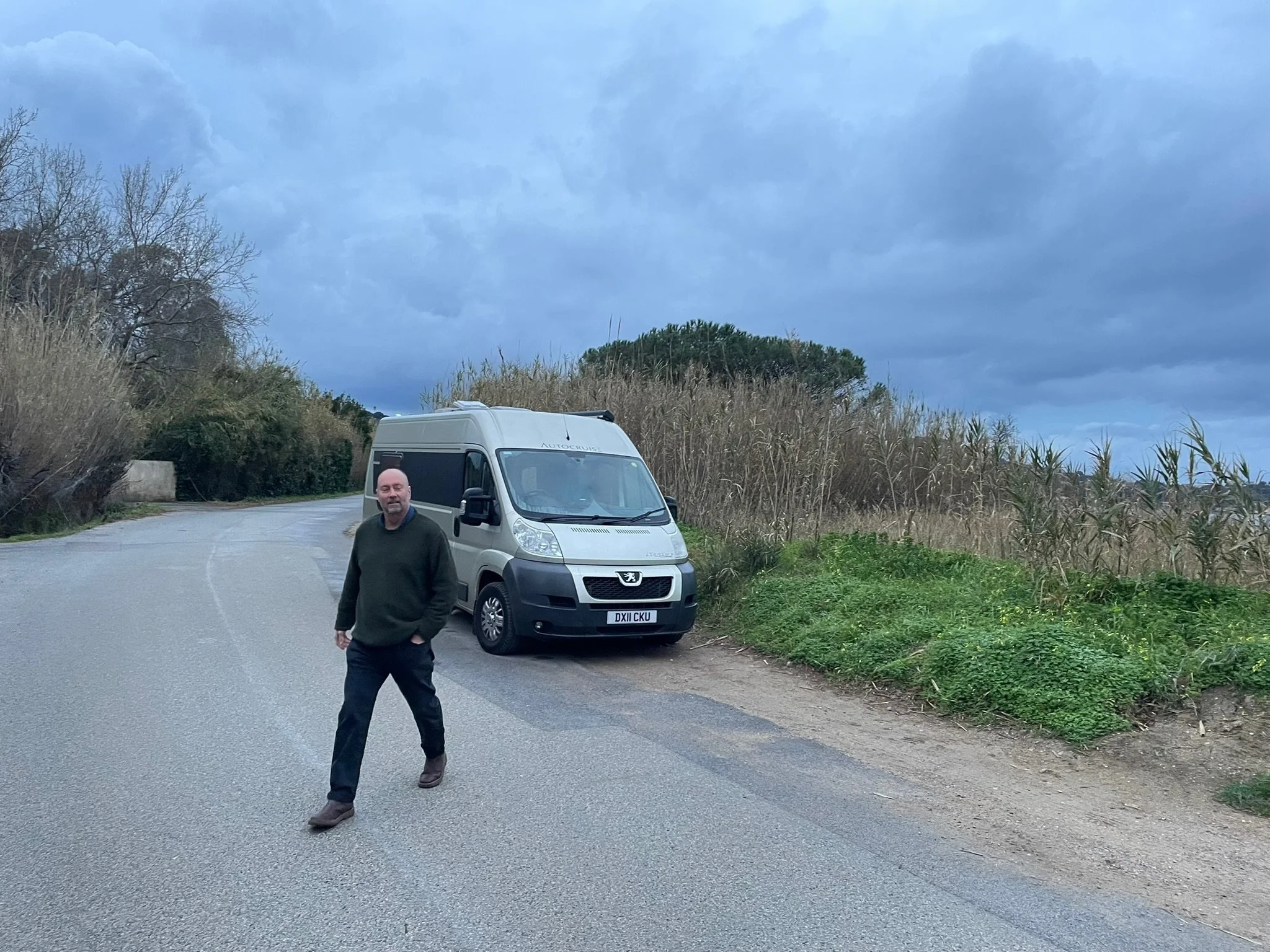
It was the kind of wild camp that justifies the entire enterprise – the kind of spot that exists precisely because you are travelling at van pace rather than motorway pace, because you turned left instead of continuing on, because you had nowhere particular to be and all the time in the world to be there.
It was a couple of weeks after Brigitte Bardot had died and there was a crash barrier leaning up against a fence that was adorned with photos of Bardot and floral tributes. We discovered why the next morning - her house was very close to where we had parked. Before breakfast we took the dog for a wander. There was nobody around apart from one lone man standing outside a lovely old house. It turned out to be her security guard who proudly told us that he had looked after her for 3 decades and that she had been so happy here in these hills, in this particular quality of light and silence away from the crowds.
The name
When we got back to the van to make coffee, it felt obvious. The van was a she and her name would be Brigitte.

Not because of the celebrity (and especially not because of her increasingly right wing political views which we do NOT share). Not as a tribute or a commemoration in any formal sense. But because of the accident of being in that particular place at that particular time - because a van that drives you through floods and snow to a wild camp on a hillside near Saint-Tropez, two weeks after a woman who spent her whole life loving this landscape has died, has earned something more than a colour and a registration number.
Because France was my mum’s favourite country before it was mine. We camped here every summer when I was small – usually in tents, the particular sensory memory of canvas in summer heat and baguettes from a village bakery and my mum’s absolute certainty that France was the best place on earth. She died last summer. The van came shortly after. There is a connection there that doesn’t need spelling out, and when we found ourselves on that hillside near Bardot’s house – another woman who loved France with a particular fierceness – the name carried more than one meaning.

My mum would have loved this trip. She would have been enthusiastic about every campsite, every boulangerie, every road we chose. Driving through France in Brigitte, I think about her often. The van carries her with me in a way that I hadn’t anticipated but am very glad of.
What the name means now
Brigitte is fifteen years old. She pulls slightly to the left for reasons that three different mechanics can’t explain, and which we have come to accept as simply one of her foibles. She makes a noise on cold mornings that suggests mild protest before she settles into the drive. She is not perfect.
She is also the van that didn’t blink at the floods. That kept us warm in the snow blizzard in northern France. That carried us safely south through Dijon and Burgundy to the coast, to Bormes-les-Mimosas and the mimosa on the hillside, to a wild camp we found by accident in the hills above Saint-Tropez, to the best trip of our lives.
Take the small roads. Stop when something feels right. The name, like most of the best things, will suddenly appear.
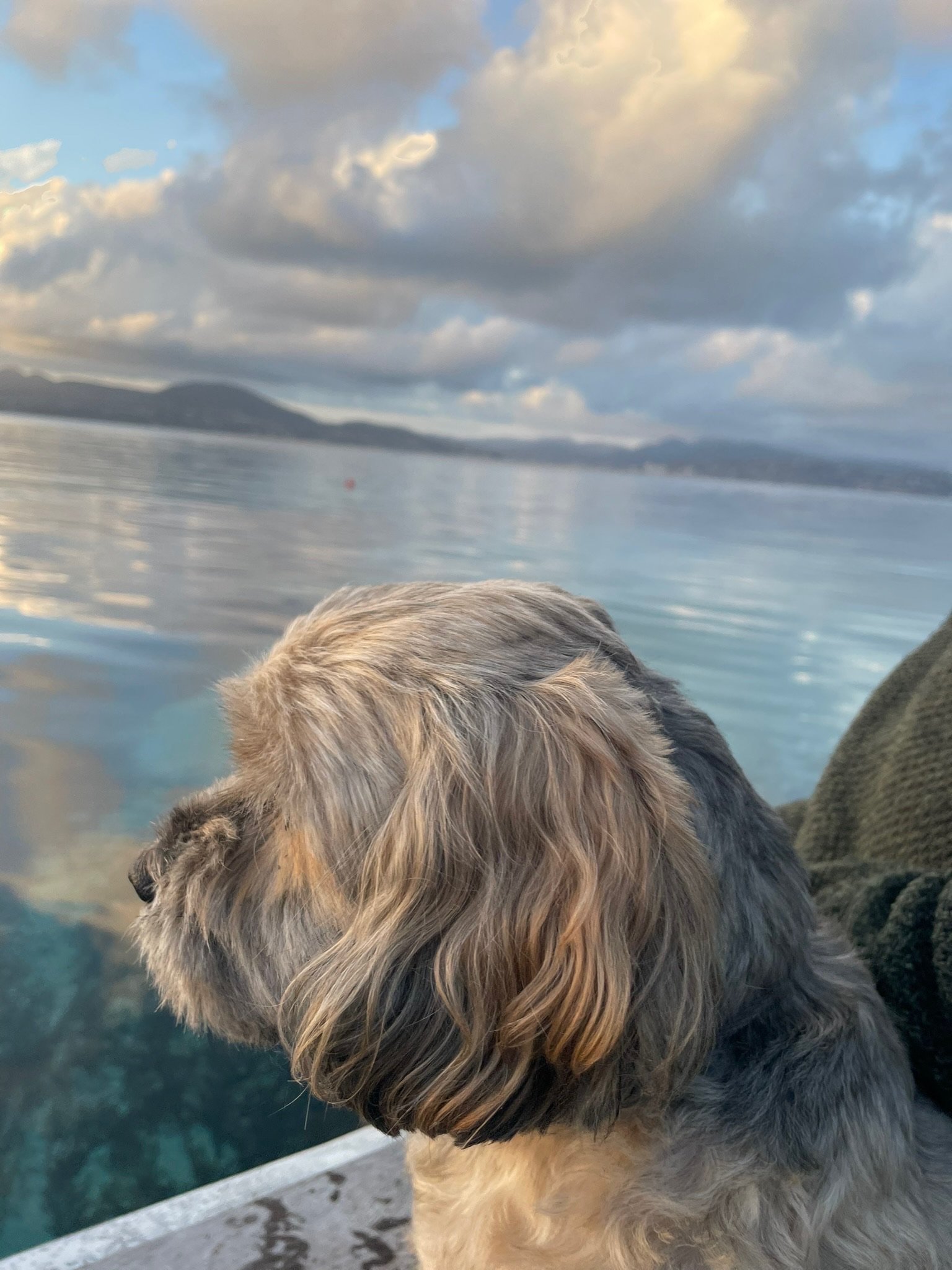
Kate, Charlie, Huffle & Brigitte
Kettle & Keys
comfort, wherever you park up.